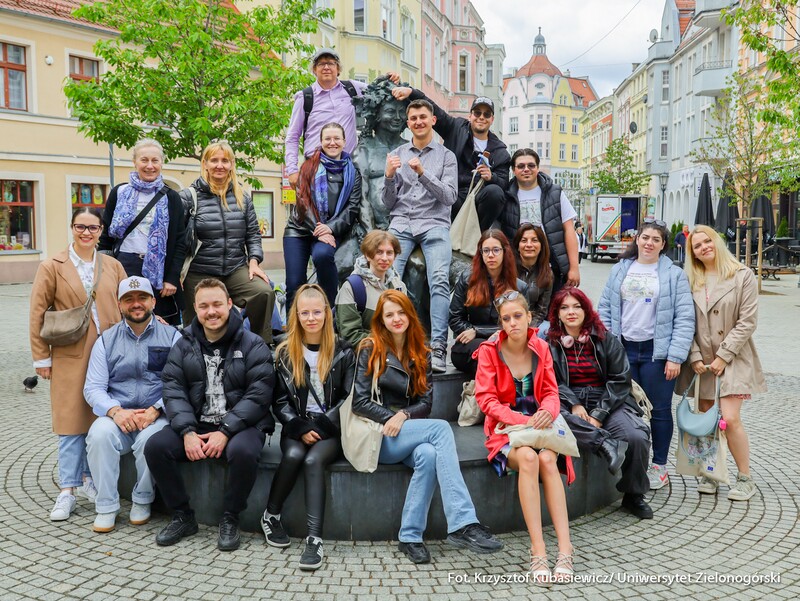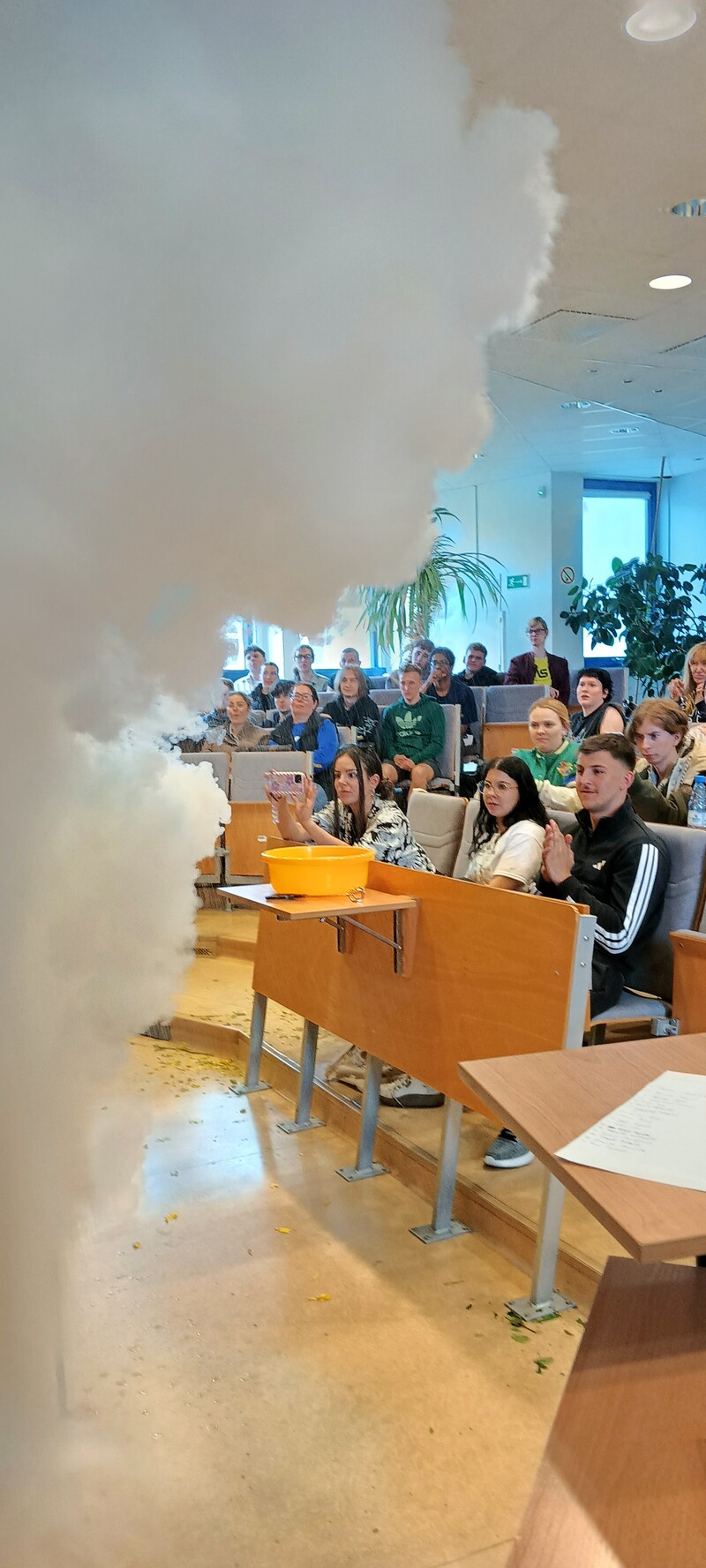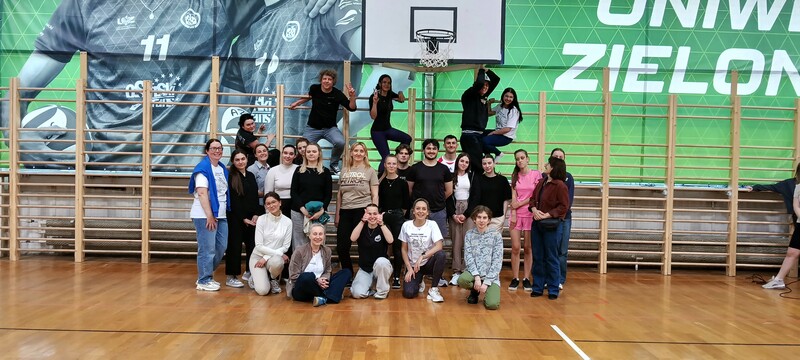
On Friday, 15 May, we officially concluded the international school From Chaos to Harmony in Complex Systems. During a ceremonial event held at the Rectorate of the University of Zielona Góra, certificates were awarded to participants of the third and final edition of this initiative. The event marked the culmination of a three-year series of educational programmes (2024–2026) implemented in the form of Blended Intensive Programmes (BIPs), funded by the Erasmus+ Programme and co-financed by the European Union.
It is worth recalling that the launch of this series in 2024 also marked the first BIP programme ever organised at our University. Over the past three years, we have successfully created a unique international platform for the exchange of knowledge and ideas in the field of complex systems theory. The conclusion of the series coincided with another exceptional occasion – the celebrations of the 25th anniversary of the University of Zielona Góra (2001–2026).
The Three-Year Programme Structure:
Throughout the three years, the programme maintained a stable international partnership structure, connecting Central Europe, Southern Europe, and the Baltic region. The following partner institutions participated in the implementation of all three editions:
The organisational model developed over the three-year period was firmly grounded in interdisciplinarity. The core organising committee consisted of three leading academic units represented by their coordinators:
The implementation of the schools was further supported by staff members from the Prof. Janusz Gil Institute of Astronomy, the Institute of Mathematics, the Institute of Psychology, the Institute of Pedagogy, and the Institute of Sport, Tourism and Human Nutrition.
The schools brought together an international team of lecturers, researchers, and practitioners.
Representatives of the Natural and Exact Sciences (University of Zielona Góra):
Dr Sylwia Andrzejczak-Grządko (biology), Prof. UZ Gopal Bhatta, DSc (astronomy), Prof. UZ Jacek Bojarski, PhD (mathematics), Dr Paweł Czechowski (biology), Alicja Dubicka-Czechowska (biology), Martyna Dalecka (sport sciences), Prof. Andrzej Drzewiński (physics), Prof. Beata Gabryś (biology), Dr Agnieszka Gandecka (tourism), Dr Bartłomiej Hes (sport sciences), Prof. Leszek Jerzak (zoology and ecology), Dr Stefan Jerzyniak (physics), Sangeetha Kizhakkekalam (astronomy), Prof. UZ Sylwia Kondej, DSc (physics), Sebastian Kruk (physics), Dr Maciej Marć (physics), Navaneeth Padikkalakandy (astronomy), Prof. Maria Przybylska (mathematical physics), and Dr Karolina Rożko (astronomy and philosophy).
Representatives of the Social Sciences and Humanities (University of Zielona Góra):
Dr Dorota Bazuń (sociology), Dr Marzanna Farnicka (psychology), Dr Sinan Tankut Gülhan (sociology), Dr Artur Kinal (sociology), Dr Magdalena Pokrzyńska (sociology), Prof. UZ Dorota Szaban, DSc (sociology), and Dr Andrzej Zygadło (pedagogy).
International Experts and External Partners:
PhD Alina Kalashnikova (Ukraine – sociology), PhD Bogdan Mucea (Romania – sociology), PhD Claudiu Stefani (Romania – sociology), Yasin Turan (Türkiye – sociology and English philology), PhD Zdenko Širka (Czech Republic – theology and philosophy), Jarosław Skorulski (The Gardens of Art Foundation in Zatonie), and representatives of the Głogów Borderlands Education Association.
Student Volunteers
Students of the University of Zielona Góra also played a vital role in supporting the schools as volunteers:
Kacper Banaszkiewicz (social design), Justyna Bondaronok (social design), Hubert Borek (sociology), Grzegorz Borowicz (social design), Wiktoria Chojnacka (sociology), Alexandru Corpade (sociology), Michalina Gniewosz (biotechnology), Jakub Glapiński (social design), Mateusz Grzanowski (biotechnology), Aleksandra Gudzowska (biotechnology), Marharyta Hinkul (sociology), Julia Kaczmarek (biotechnology), Julia Kamińska (sociology), Barbara Konys (biotechnology), Jagoda Kudlińska (biotechnology), Nikoloz Kurtskhalia (physics), Antonina Mamczur (biotechnology), Hanna Matuszek (sociology), Tatiana Martyniuk (biotechnology), Elpida Oikomomou (physics), German Ostrovski (sociology), Taisiia Pianykh (sociology), Amelia Proc (sociology), Iwona Sasiak (sociology), Joao Silva (physics), Kacper Ślipko (physics), Piotr Szafiński (sociology), Piotr Turowski (biotechnology), Melis Vafa (physics), Julia Wlazło (biotechnology), Kornelia Wojciechowska (sociology), and Dawid Żegleń (biotechnology).
Across the three editions of the school series devoted to complex systems, a total of 65 students from partner universities and 32 lecturers, including five international academics, participated in the programme. The organisation of the schools also involved 32 students from the University of Zielona Góra, representing the Faculty of Natural Sciences and the Faculty of Social Sciences. The entire initiative was implemented with the active support of the staff of the University's Department of International Cooperation.
The three-year series of BIP schools on complex systems at the University of Zielona Góra has demonstrated that contemporary higher education requires breaking down traditional disciplinary boundaries. By bringing together diverse perspectives within a single programme, the international academic community was able to develop a holistic understanding of an increasingly dynamic and rapidly changing world.
This initiative significantly strengthened the internationalisation of the University of Zielona Góra, reinforcing its position as an important hub for academic networking within the European Higher Education Area. In 2025, the project was recognised by the Erasmus+ National Agency as an exemplary example of good practice.