On 25–26 June 2026, as part of the celebrations marking the 25th anniversary of the University of Zielona Góra, a conference entitled “Science – Technology – Industry: Synergy of People, Science and Technology in the Face of Global Challenges” was held. The event brought together representatives of academia, business-support institutions and industry from Poland and Germany.
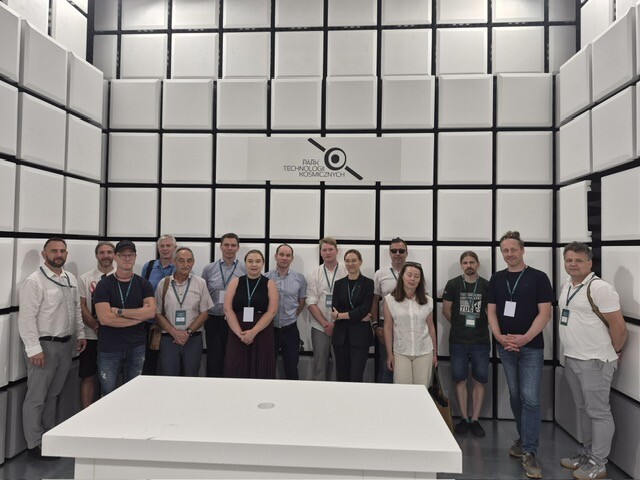
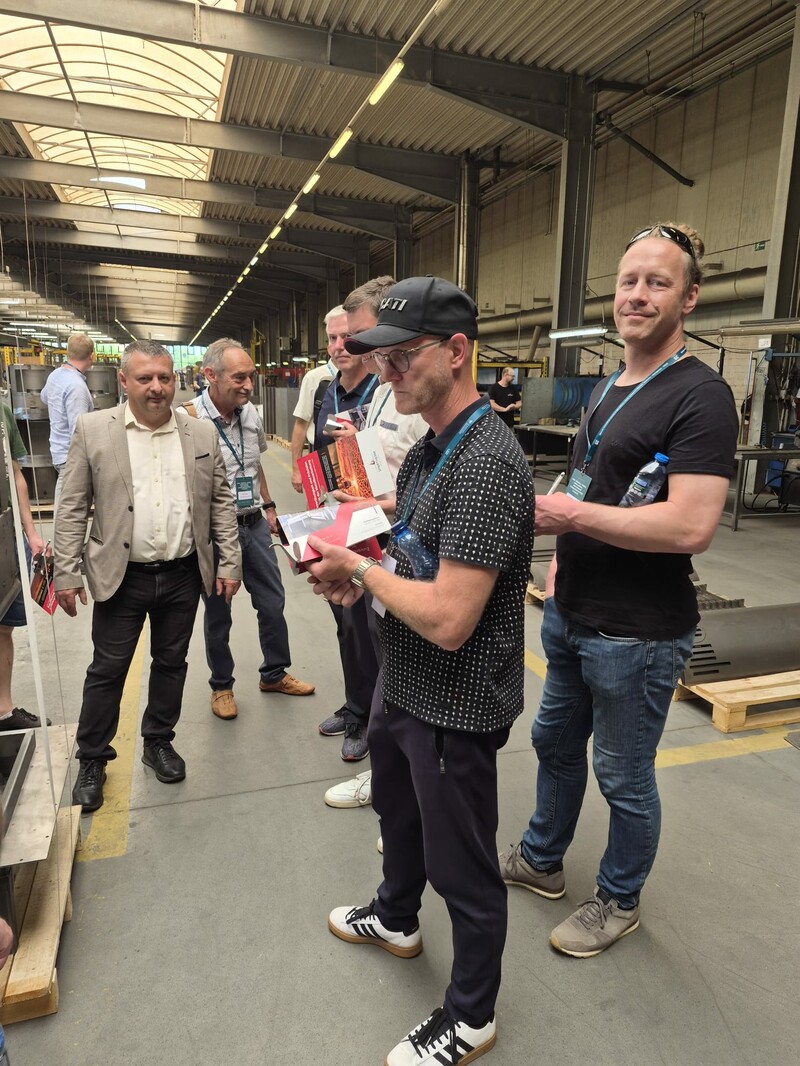
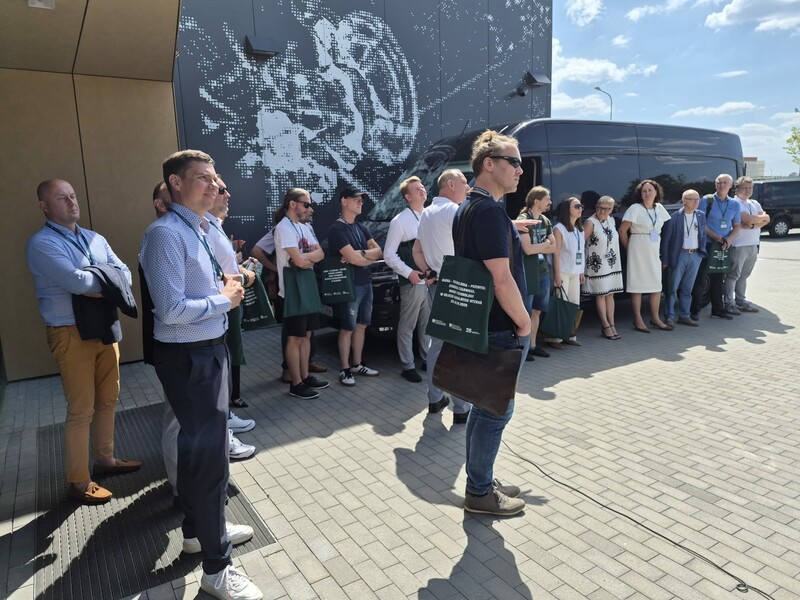
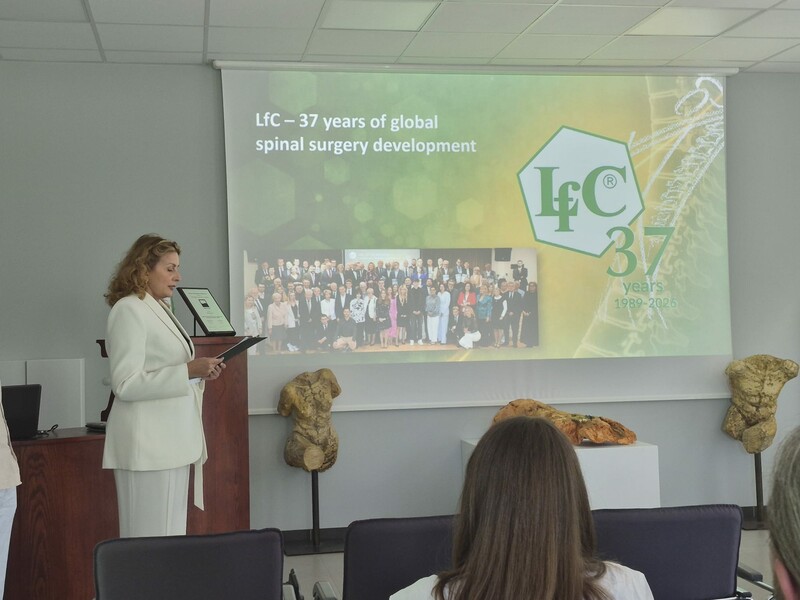
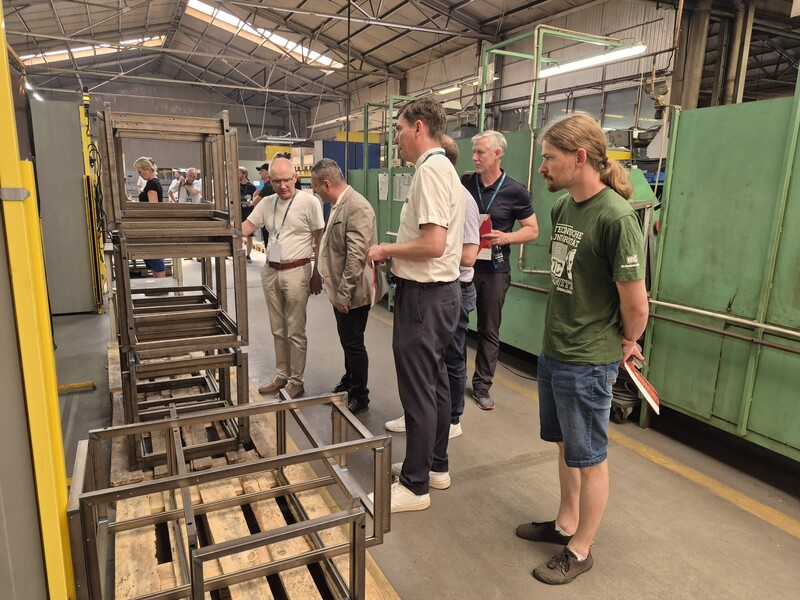
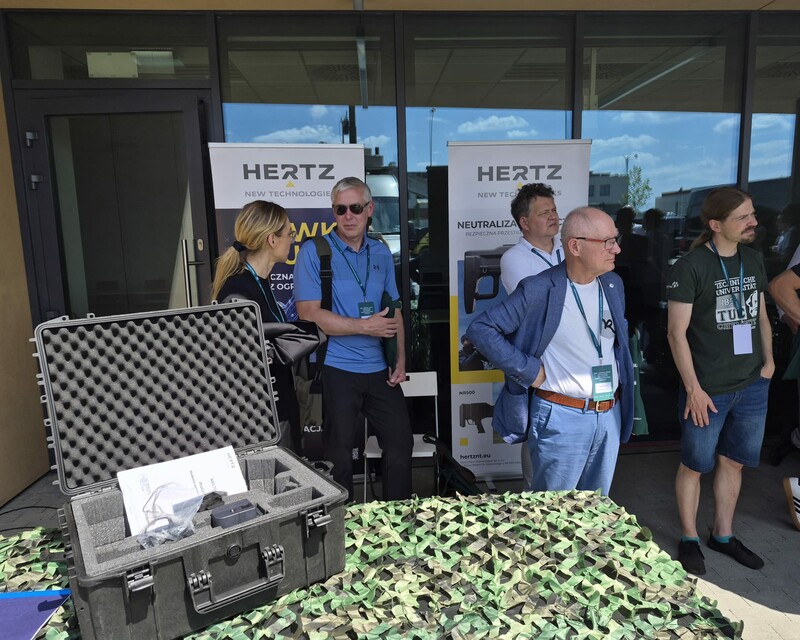
The conference attracted considerable interest due to its unique format. As Karol Dąbrowski, Director of the Centre for Entrepreneurship and Technology Transfer at the University of Zielona Góra and co-organiser of the event, emphasised: “Instead of discussing challenges and processes taking place in industry in conference rooms, it is better to see them live, in the places where they actually occur.” Over the course of two intensive days, the conference participants visited six manufacturing companies in the Zielona Góra and Gorzów Wielkopolski areas: Hertz New Technologies, FlyLab, LFC, the Space Technology Park, Spartherm and Inter Sicherheits Service.
The two-day programme focused on the practical implementation of innovation in an era of global crises – from the energy transition and process automation to space technologies and cybersecurity. Visits to such diverse enterprises enabled researchers and entrepreneurs from both countries to assess these issues directly. They were able to see how academic theory translates into tangible industrial practice.
At high-tech companies such as Hertz New Technologies and FlyLab, discussions focused on the future of autonomous systems and the challenges of data protection in the age of AI. The visit to the Space Technology Park and LFC, a leader in medical engineering, demonstrated that the Polish-German border region is becoming a strong European hub for precision engineering. In turn, discussions held at the production facilities of Spartherm and Inter Sicherheits Service addressed the optimisation of raw material consumption, decarbonisation, and the pressure exerted on traditional industry by new EU regulations concerning sustainable development (ESG). In addition to the study visits to manufacturing facilities, participants took part in two afternoon sessions. These provided an opportunity to summarise the visits and develop recommendations for further action.
First, participants highlighted the need to shorten the path “from the laboratory to the production line.” They pointed out that Polish and German companies need technologically validated, ready-to-implement solutions. The issue is not merely theoretical scientific publications; universities must become business partners of first choice. As Dr Matthias Rehm from Chemnitz University of Technology argued: “Sustainable development and Industry 5.0 are not an ideology; they are pure engineering. Our research into modern, sustainable industry, conducted jointly with Polish partners, shows that investments in energy efficiency pay off, on average, 30% faster. This happens when researchers work closely with factory technical staff already at the stage of designing production processes. Data is the foundation here, not a threat.”
Another conclusion emerging from the meetings concerned the potential for cross-border cooperation. As Włodzimierz Fleischer, President of the Lubuskie Metal Cluster, emphasised: “German process culture and market maturity, combined with Polish engineering flexibility and modern production facilities, provide the Lubusz region and neighbouring German federal states with a unique synergy on a European scale.”
The conference demonstrated that the synergy of people, science and technology is not merely a catchy marketing slogan. The two-day meetings in Zielona Góra and Gorzów Wielkopolski showed that openness to dialogue, the willingness to present real production conditions, and cross-border exchange of experience are the only effective means of building a resilient and modern economy of the future. As Prof. Justyna Patalas-Maliszewska, Vice-Rector for Research and International Cooperation, summarised: “In celebrating the 25th anniversary of our university, we did not want to look only to the past. This conference is a manifesto of our strategy for the future. We want to be a bridge. We showed our German partners and the local business community that the University of Zielona Góra is capable of facilitating a challenging dialogue on global technological and climate-related challenges directly within the industrial ecosystem.”
The conference organisers would like to extend their special thanks to the representatives of the companies that welcomed the conference participants with great commitment, as well as to Mr Włodzimierz Fleischer, President of the Lubuskie Metal Cluster, for his assistance in organising the meetings and his active participation in the conference.