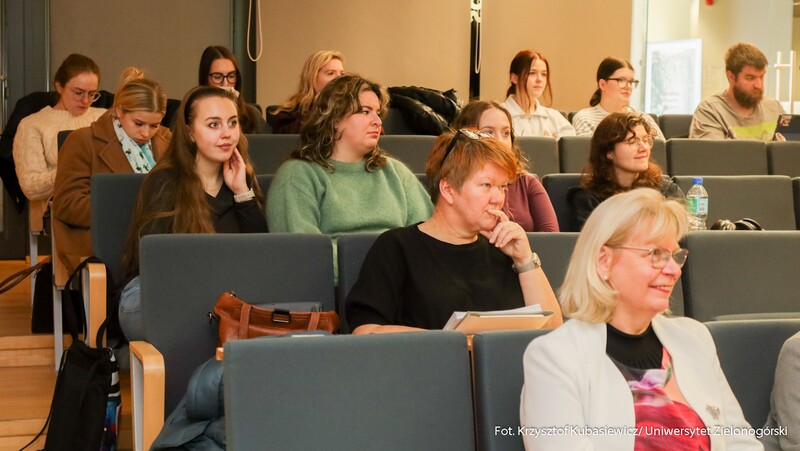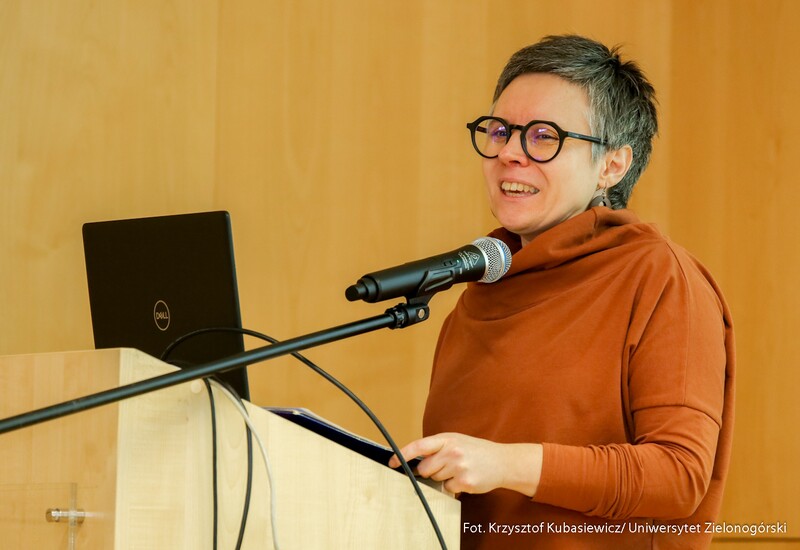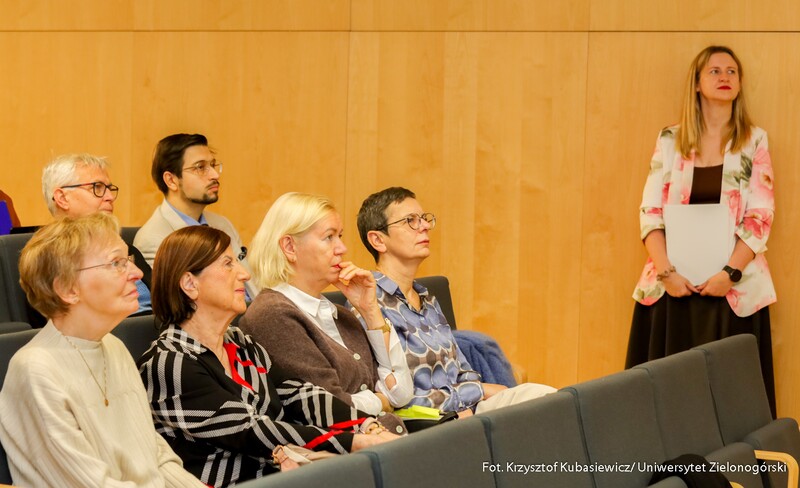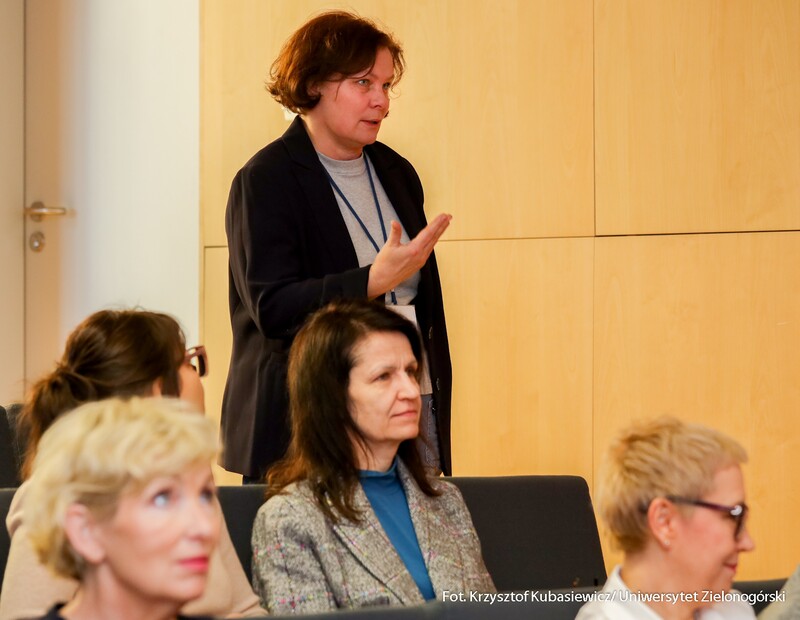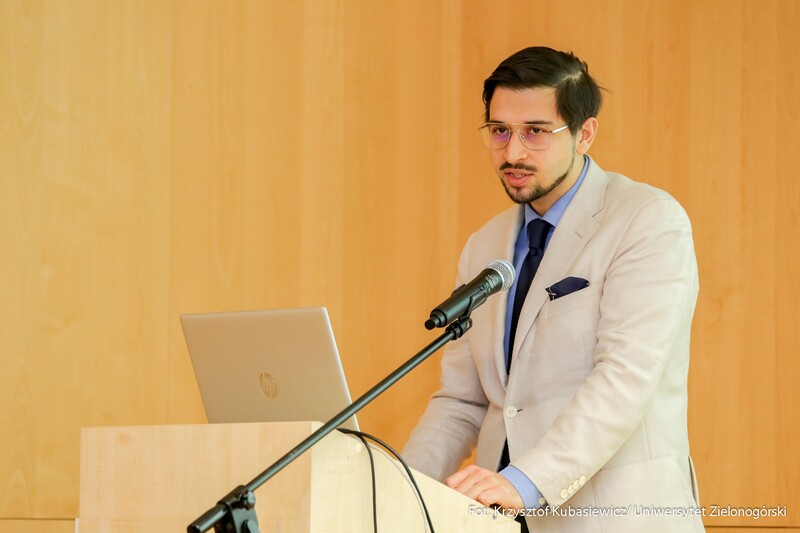
The 7th Methodological Seminar dedicated to the memory of Professor Edward Hajduk has concluded. The event took place on Wednesday, 3 December this year, at the University of Zielona Góra Library. The seminar was organised by the Laboratory of Social Research Methodology, operating within the Department of Andragogy and Social Research Methodology at the Institute of Pedagogy of the University of Zielona Góra.
The aim of the annual seminar is twofold. On the one hand, it is intended to cultivate the memory of Professor Edward Hajduk—an exceptionally important figure for the pedagogical community in Zielona Góra. It is worth recalling that Professor Hajduk served as Vice-Rector of the Tadeusz Kotarbiński Higher School of Education, Dean of the Faculty of Pedagogy, and Director of the Institute of Social Pedagogy. He was also Head of the Department of Scientific Research Methodology, a supervisor of numerous academic theses, and an outstanding advisor in scholarly work. This year marks the 10th anniversary of Professor Hajduk’s passing. On this occasion, the seminar opened with a lecture by Dr hab. Ewa Narkiewicz-Niedbalec, Prof. UZ, entitled “In Memory of Professor Edward Hajduk (1932–2015).”
On the other hand, the seminar aims to create a space for the presentation and discussion of research theory and practice within the social sciences. For this reason, representatives of pedagogy, psychology, and sociology—who employ diverse paradigms, models, and research methods in their scholarly work—are invited to actively participate in the event.
In this edition, presentations were delivered by five speakers. Dr Anna Bilon-Piórko, representing the University of Lower Silesia DSW and Jönköping University, in her presentation “Diffraction as a Post-Qualitative Methodology for Researching Social Justice in Helping Practices,” introduced the assumptions of post-qualitative research and Karen Barad’s agential realism. Participants were also familiarised with the possibilities of applying diffraction in research, using studies on social justice in helping practices as an example.
Dr Piotr Zwarycz from the Institute of Sociology of the University of Zielona Góra focused his presentation on the specific characteristics of researching difficult and inaccessible phenomena. Using the metaphor of a besieged fortress, he highlighted the challenges faced by researchers who decide to study such phenomena. He also shared his own research experiences, including studies conducted in the community of sport shooters.
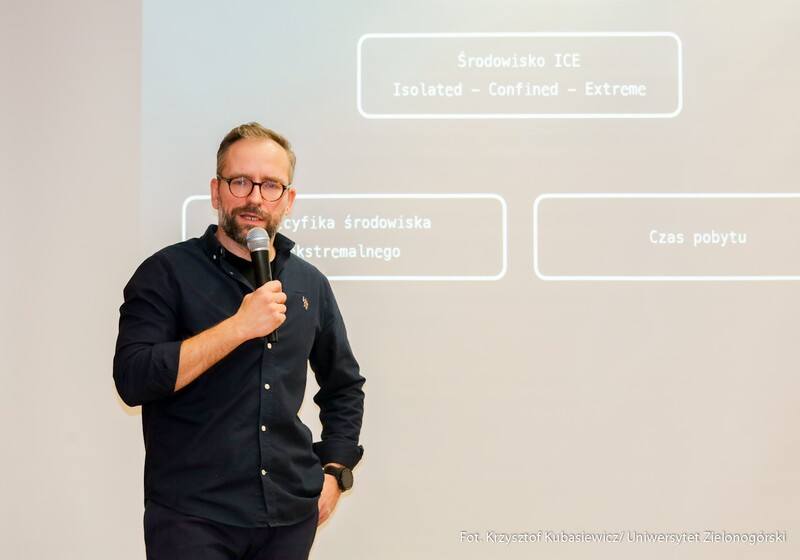
Meanwhile, Konrad Opaliński, MSc, from the Institute of Psychology of the University of Zielona Góra, presented a talk entitled “Psychology in Microgravity – Issues of Psychological Research in the Space Environment Based on the AstroMentalHealth Project.” He shared reflections on the design, preparation, and implementation of research in extreme environments, including the International Space Station and the analogue space habitat Lunares.
Dr Roksana Pilawska-Gronostaj from the Institute of Pedagogy of the University of Zielona Góra devoted her presentation to the diverse possibilities of studying film as an environment of informal learning practices.
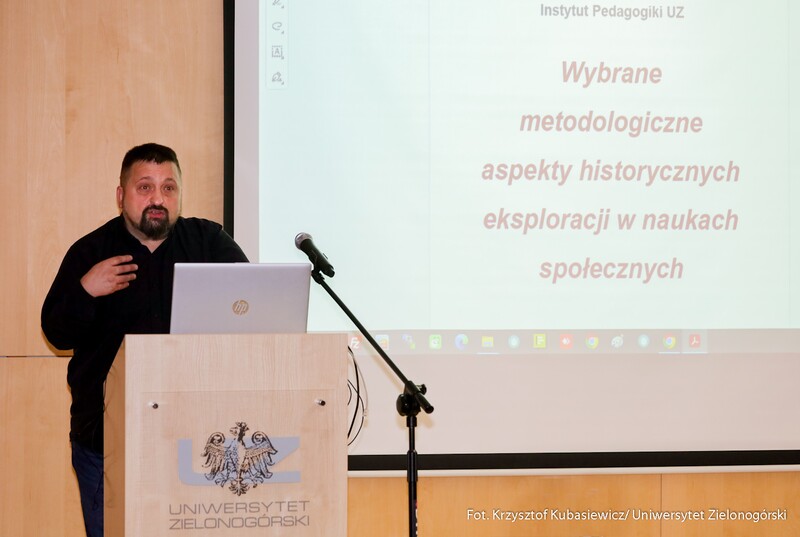
The seminar concluded with a presentation by Dr Tomasz Fetzki from the Institute of Pedagogy of the University of Zielona Góra, who addressed selected methodological aspects of historical exploration in the social sciences.
The organisers have already announced the next edition of the Methodological Seminar dedicated to the memory of Professor Edward Hajduk, to be held in 2026.