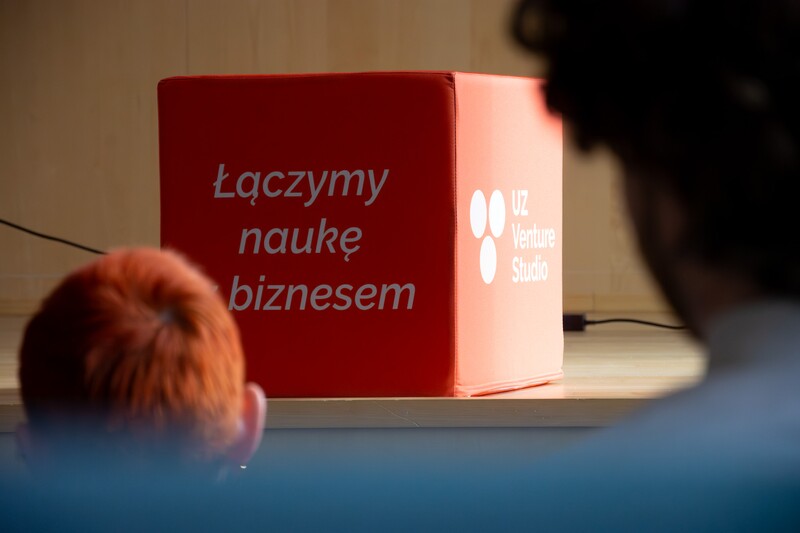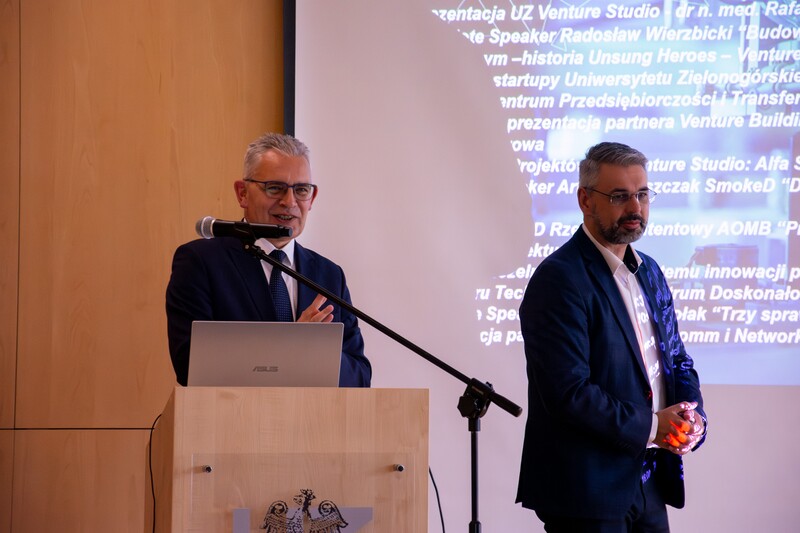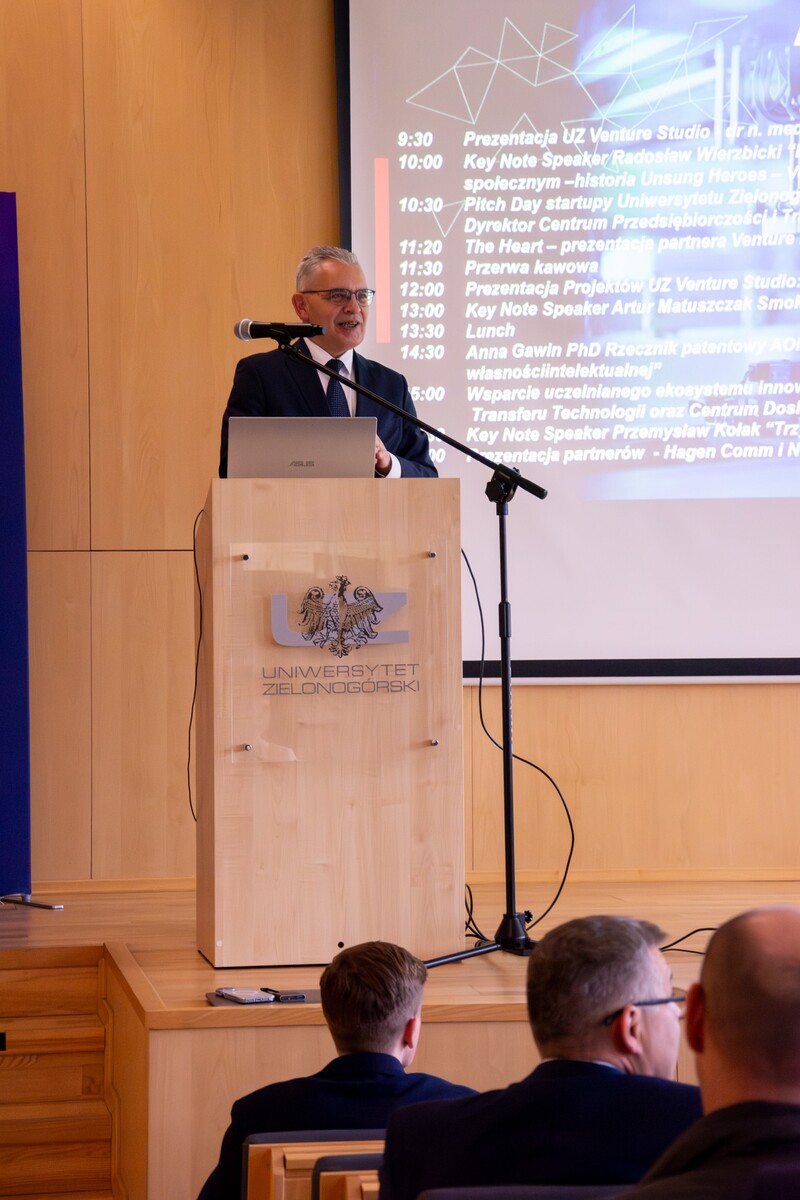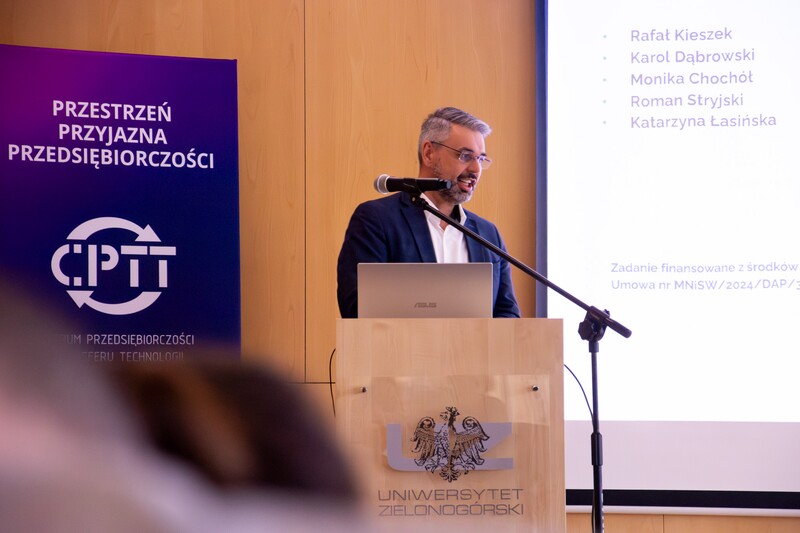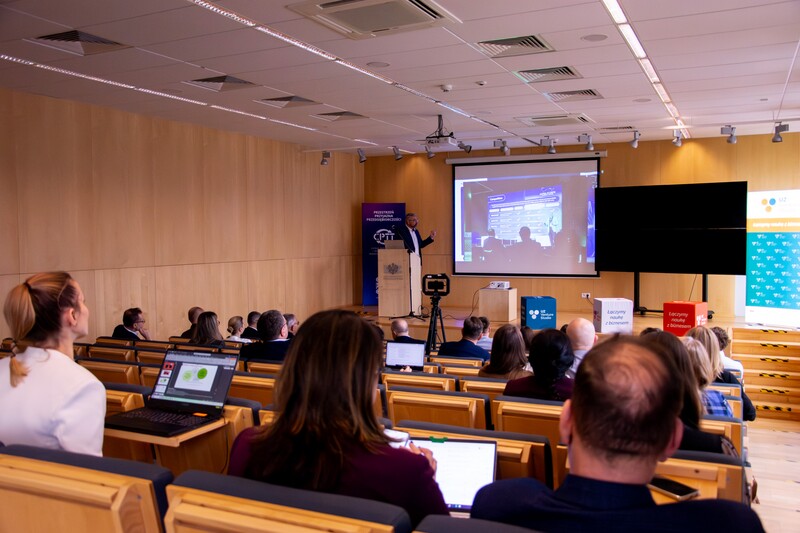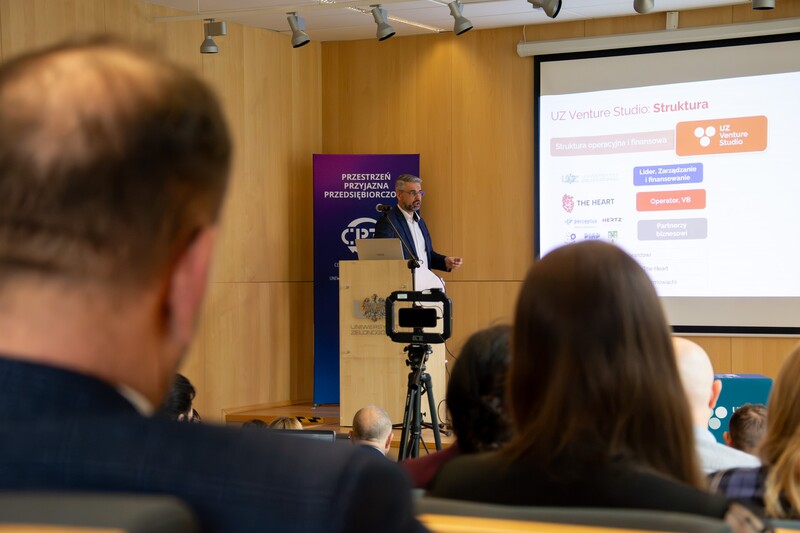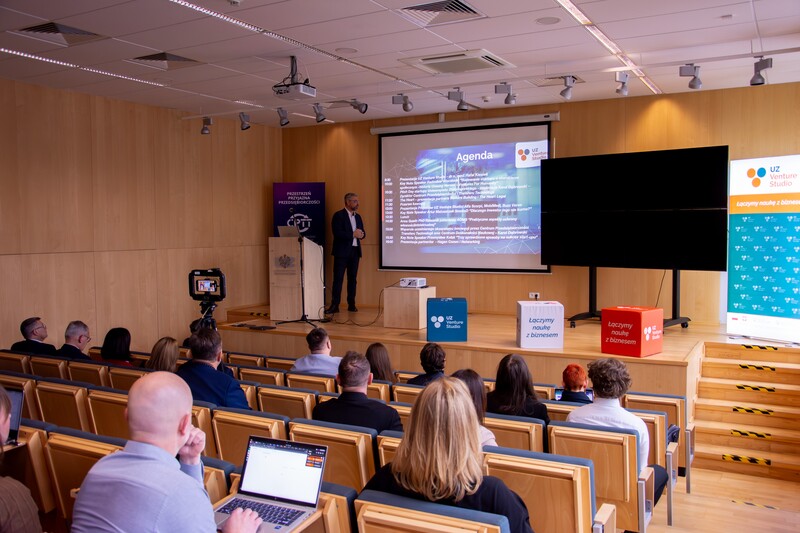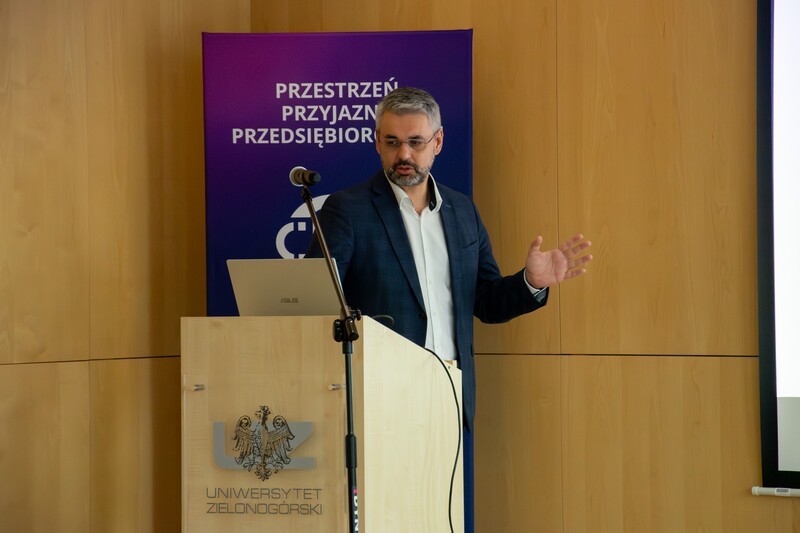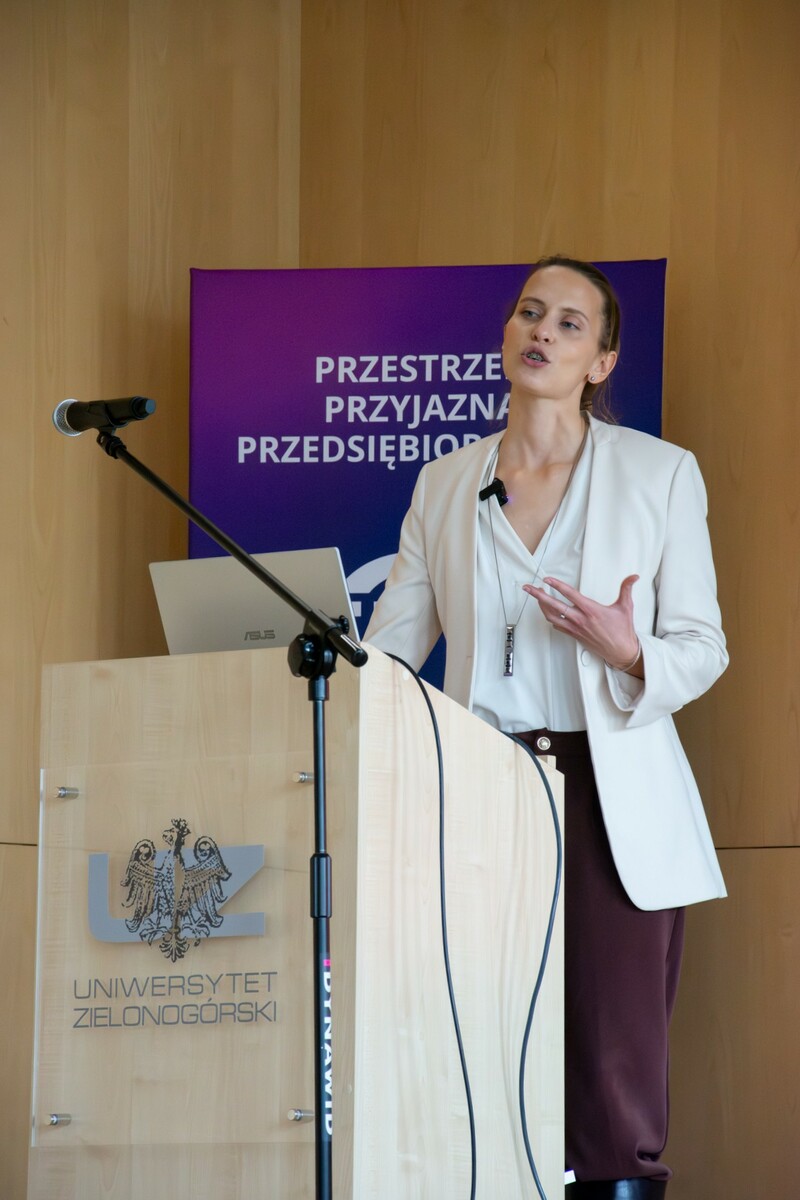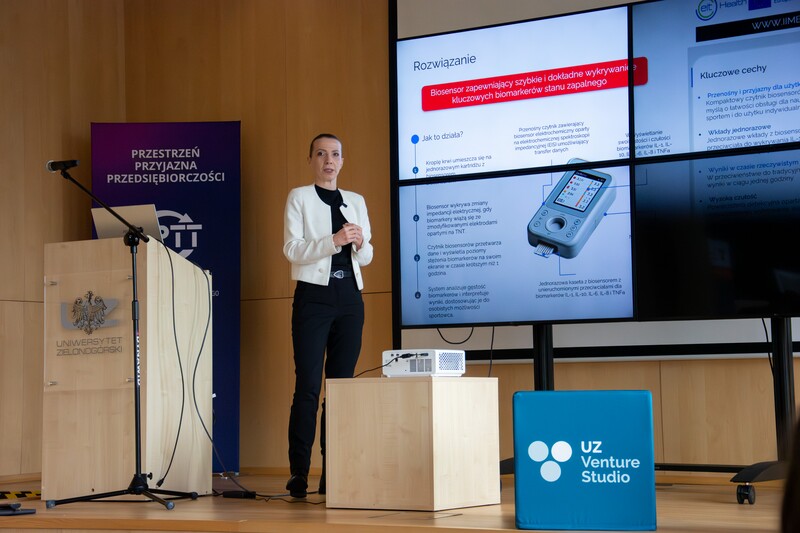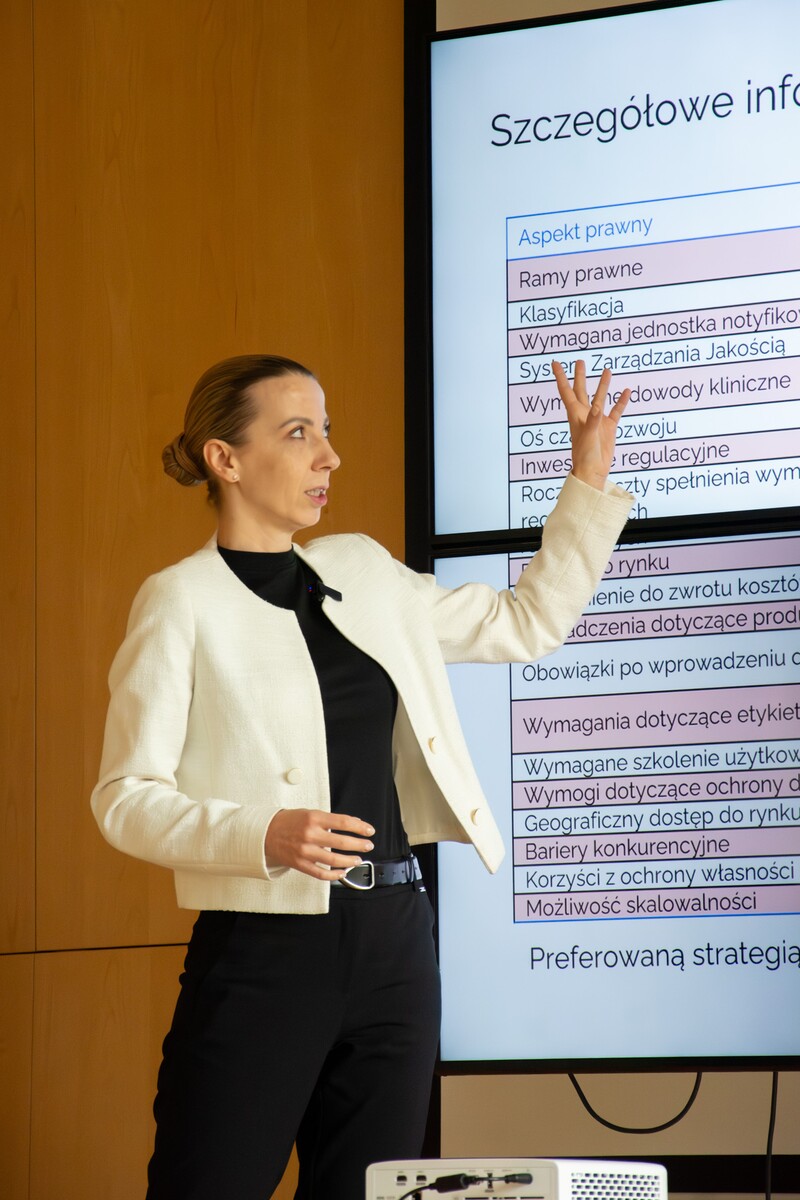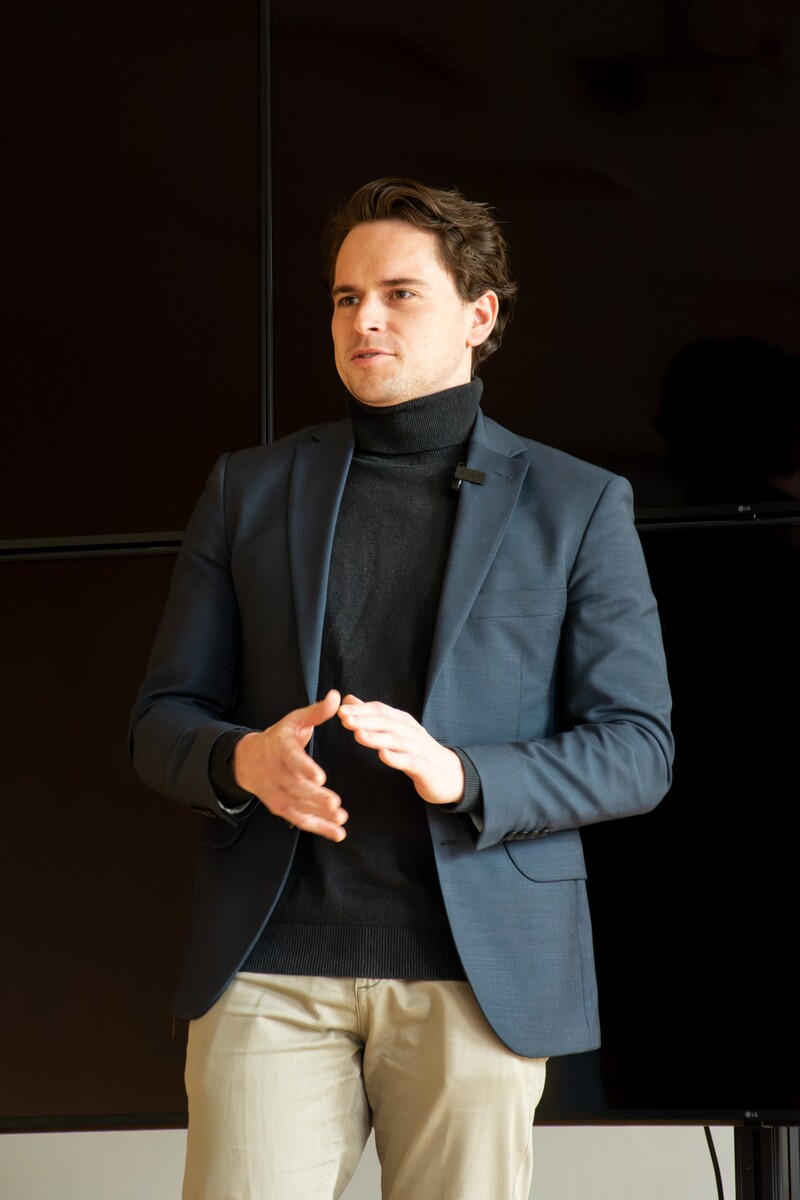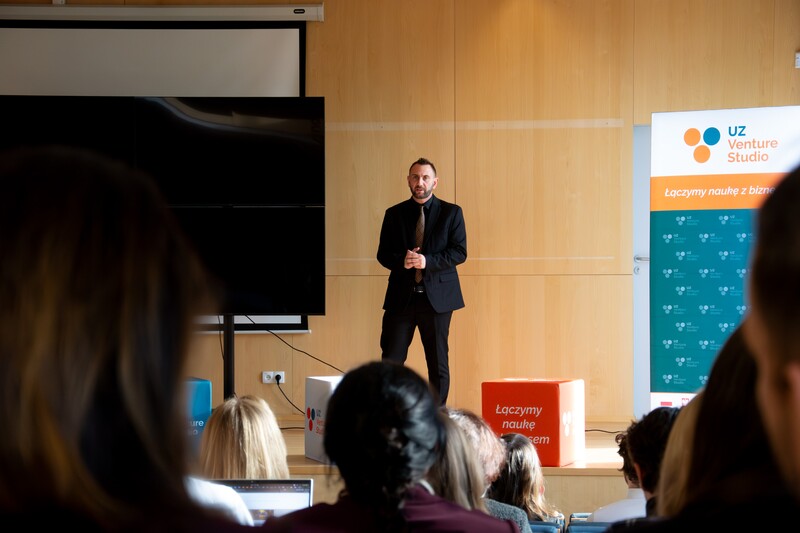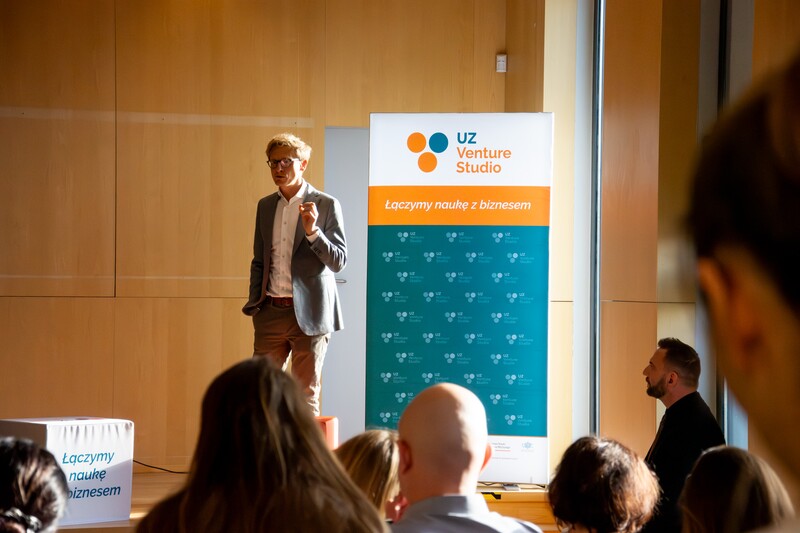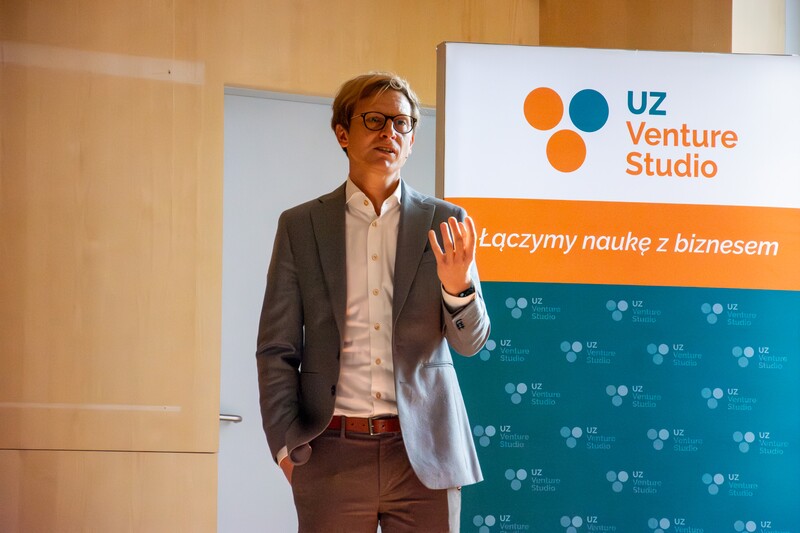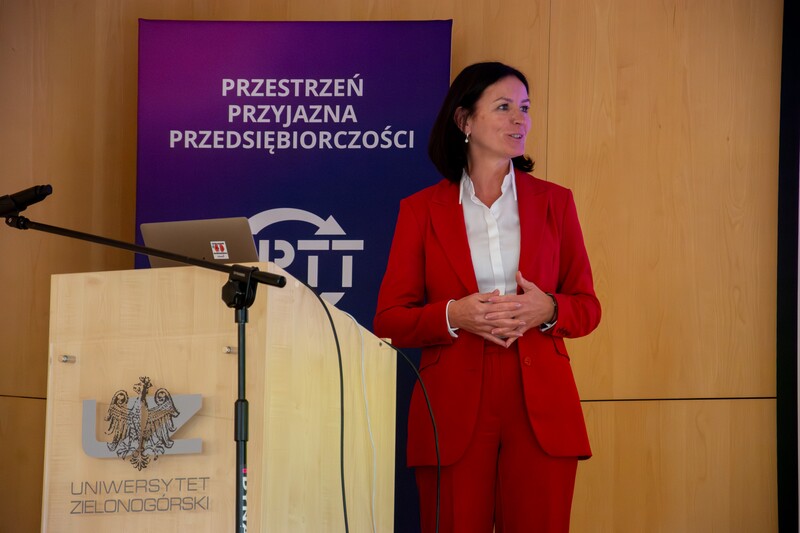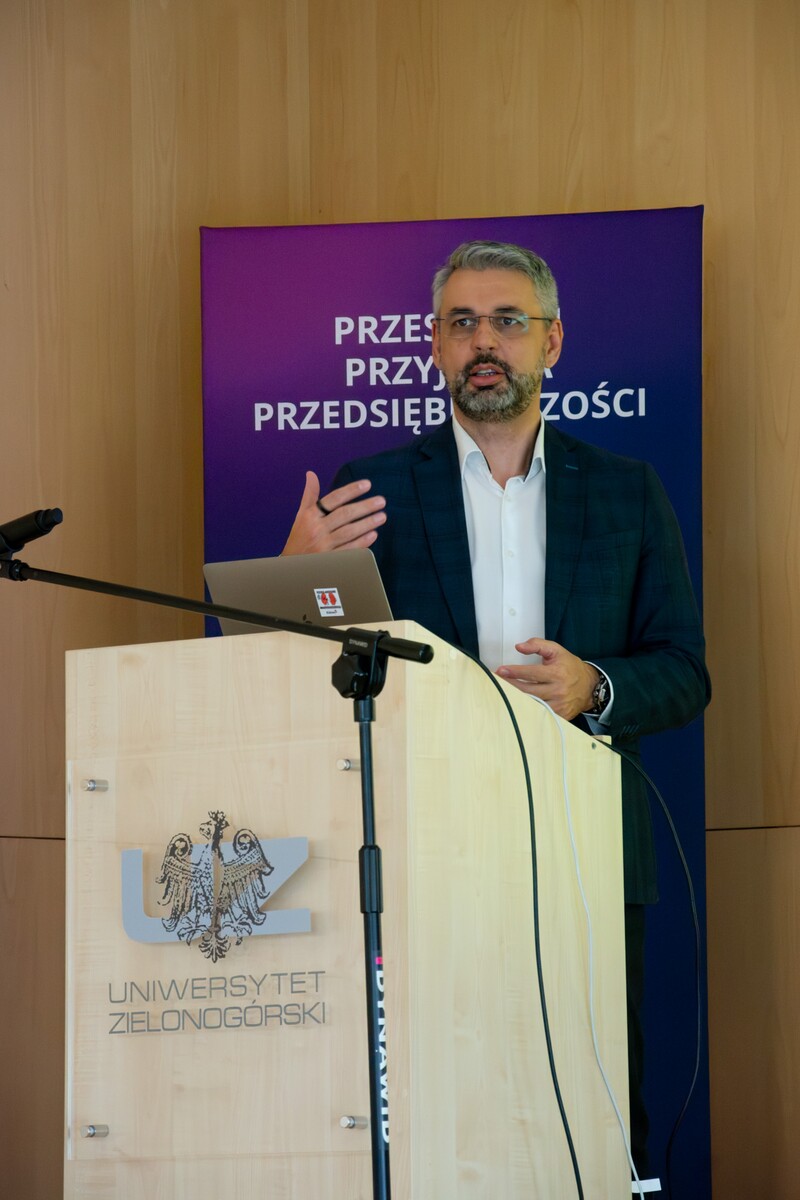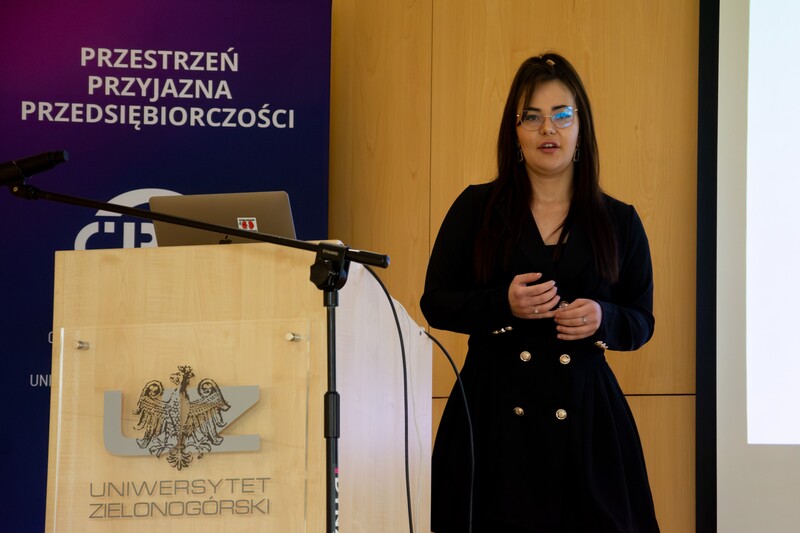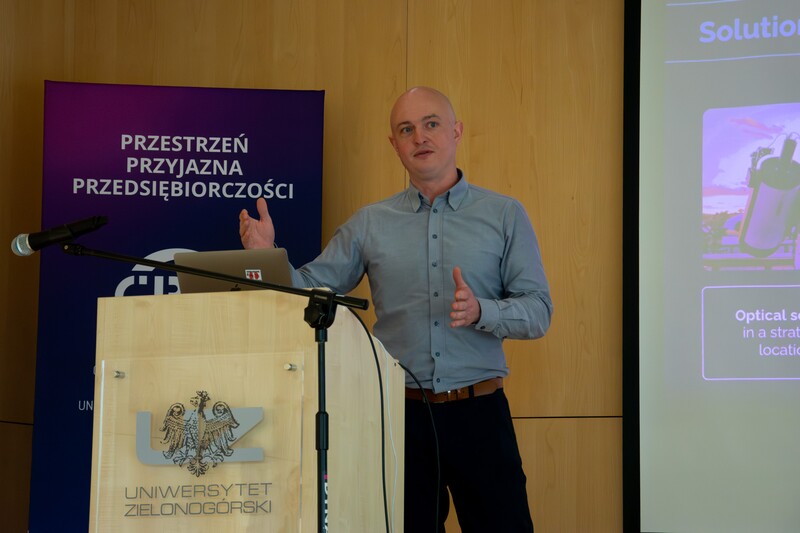
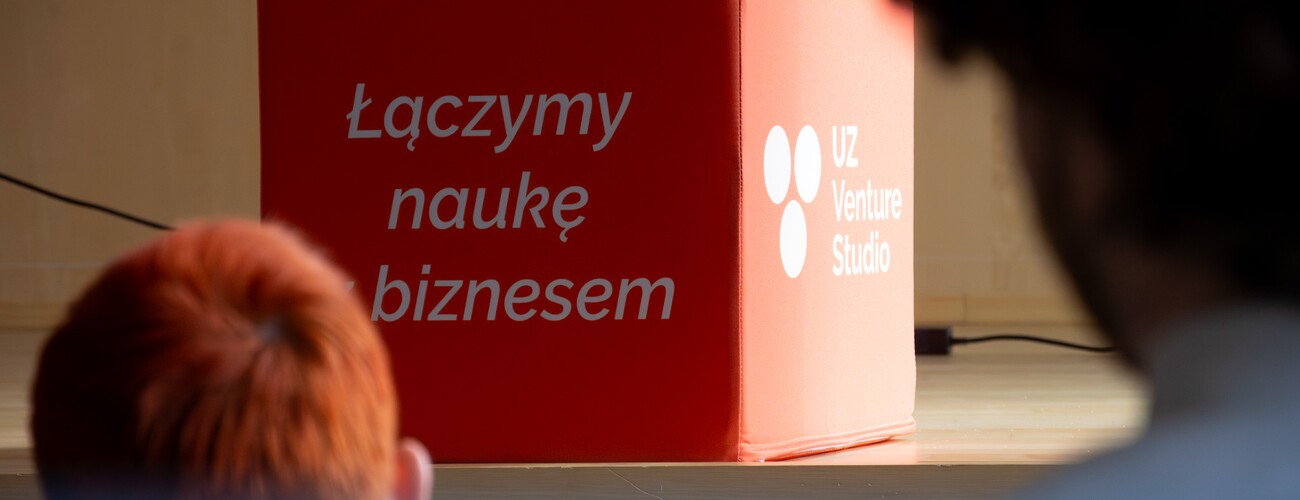
The first edition of UZ Venture Studio has come to an end. On 27 November this year, the Summit UZ Venture Studio took place at the Library of the University of Zielona Góra—a conference summarising several months of activity of the University’s startup factory. The event featured, among others, representatives of the project, startups selected within the programme, and business partners. The work carried out by UZ Venture Studio was evaluated positively and is set to be continued. The University of Zielona Góra has thus identified an effective pathway for technology transfer from academia to the economy, becoming a pioneer in this field within the Polish academic community.
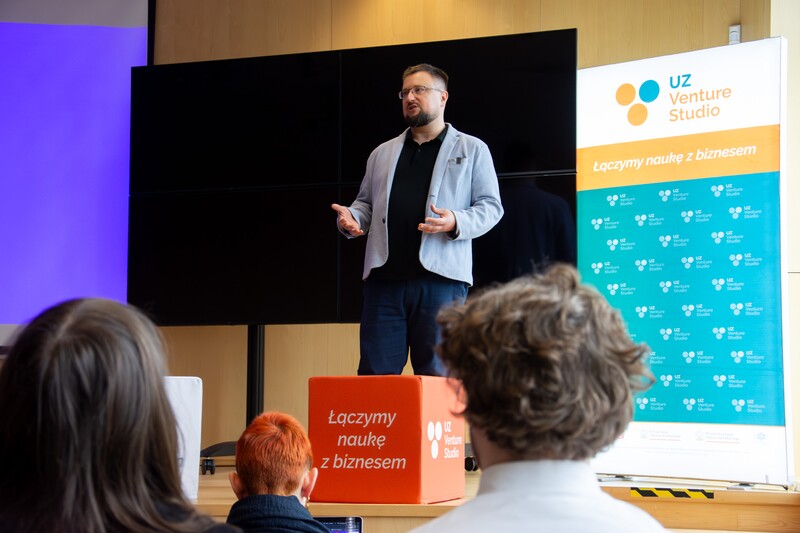
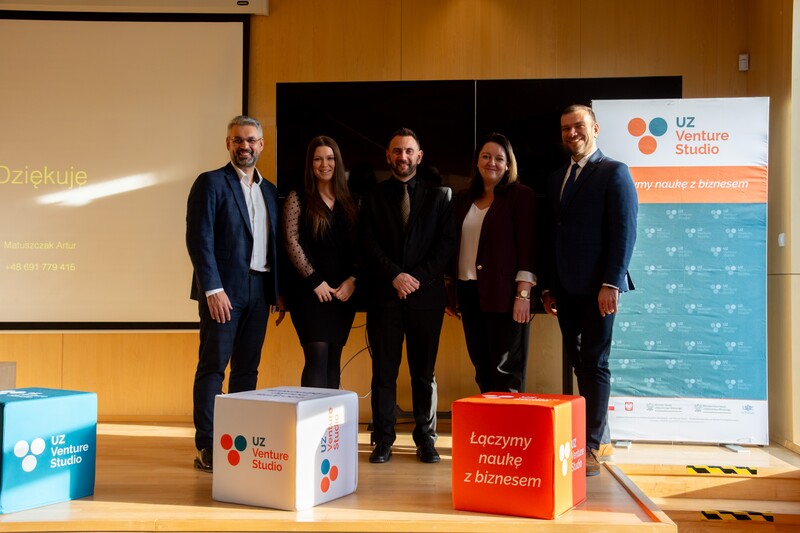
The conference was officially opened by the Rector of the University of Zielona Góra, Prof. Wojciech Strzyżewski, who congratulated all those involved in the project and wished them success in further developing their ideas and in fostering entrepreneurship at the University. The ceremony was also attended by the Vice-Rector for Research and International Cooperation, Prof. Justyna Patalas-Maliszewska, as well as the Chancellor of the University of Zielona Góra, Dr Eng. Katarzyna Łasińska, who has strongly supported the initiative from the very beginning. The floor was then taken by the Project Manager, Rafał Kieszek, MD, MBA, who presented the scope of activities of UZ Venture Studio and summarised the recent months of intensive, yet ultimately successful, work. As he explained, the idea was to create a startup ecosystem in the form of a Venture Studio—a venture building model that identifies academic and university-related ideas with commercial potential and works with them at an organic level. This involves embedding market specialists directly within project teams in order to build well-functioning startups capable of entering the market and achieving commercial success.
The activities of UZ Venture Studio began with identifying and analysing the needs of the local market, with the aim of finding potential recipients of technologies and solutions proposed by the University of Zielona Góra and determining areas where competency gaps exist within the Lubusz business sector. Subsequent stages were also carried out in close cooperation with business partners. The role of UZ Venture Studio was to match market demand with the academic and scientific potential of the University. A competition was organised as part of the programme, resulting in the selection of three projects with high commercialisation potential. The number and quality of submissions exceeded expectations, with several outstanding ideas submitted. The laureates of this edition, selected after thorough deliberations by the jury, went through a full process of validation, mentoring and commercialisation under the supervision of experts. One of the final steps was the promotion of the winning teams at the Economic Forum in Karpacz and at the DeepTech Summit 2025 in Warsaw.
UZ Venture Studio is the first project of its kind in Poland to support the commercialisation of science through the creation of new technology companies responding to real business needs. As Rafał Kieszek, MD, MBA, noted, UZ Venture Studio itself can also be viewed as a startup project. To achieve its objectives, all parties had to be fully engaged and all elements needed to work together seamlessly. The process is highly structured and draws on best practices from leading universities worldwide—examining how they achieve success in commercialising ideas and how these proven models can be replicated. According to the Project Manager, this approach has been implemented with considerable success in Zielona Góra. He also emphasised the significant support provided by the University authorities, particularly the Chancellor, as well as by many other individuals involved in the initiative.
On behalf of the main business partner in venture building, The Heart, Ignacy Studziński took the stage to present the project from the company’s perspective. He emphasised that the existence of such advanced and innovative ideas at the University, and especially the work carried out on them, was a new experience for The Heart. The number of submissions and the diversity of teams—comprising students, graduates and researchers, exactly as envisaged by the project—were also a pleasant surprise. Ignacy Studziński expressed pride that it was with The Heart that these teams took their first steps towards market entry.
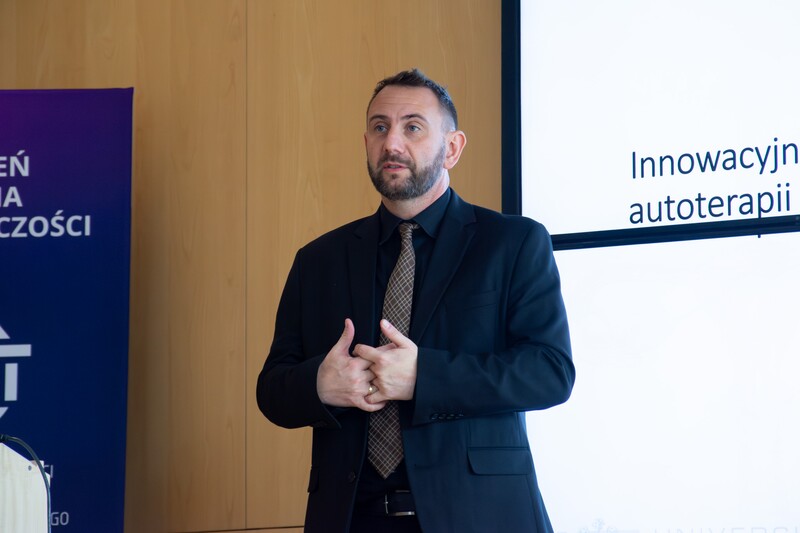
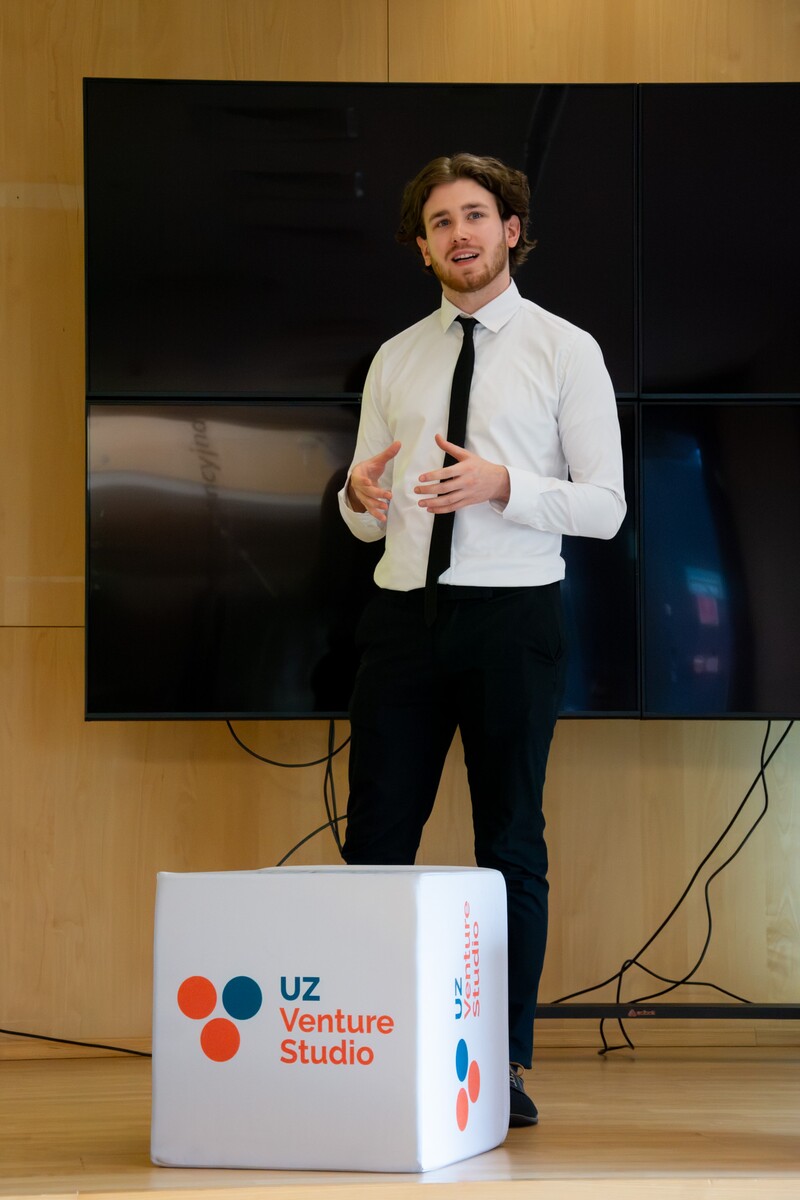
One of the key elements of the event programme was the presentation of the winning UZ Venture Studio projects: MobiMedi, BuzzVerse and Alfa Scorpi. Kinga Żmuda, a graduate of the Medical Programme and co-author of the MobiMedi project—a “locum” platform connecting medical staff with short-term replacement job offers across Poland—highlighted that market research conducted among medical institutions revealed strong interest in the proposed solution, which could help address staffing shortages. BuzzVerse Scientific Circle, creators of a modular system for remote environmental monitoring operating in LoRa technology, offering long range, low energy consumption and no requirement for Internet access, emphasised the versatility of their project, which can be applied across many industries and areas—not only forests, but also vineyards, for which the region is well known. Meanwhile, the Alfa Scorpi team developed a polarimetric sensor—an optical system in Central Asia that tracks satellites and space debris, providing precise data for global classification of orbital objects—meeting the needs of the rapidly growing space technology market. As explained by Dr Michał Żejmo from the Prof. Janusz Gil Institute of Astronomy at the University of Zielona Góra, the team focuses on observing objects in near-Earth orbit, an area of increasing utilisation, highlighting the growing need for space situational awareness to protect operational instruments from space debris.
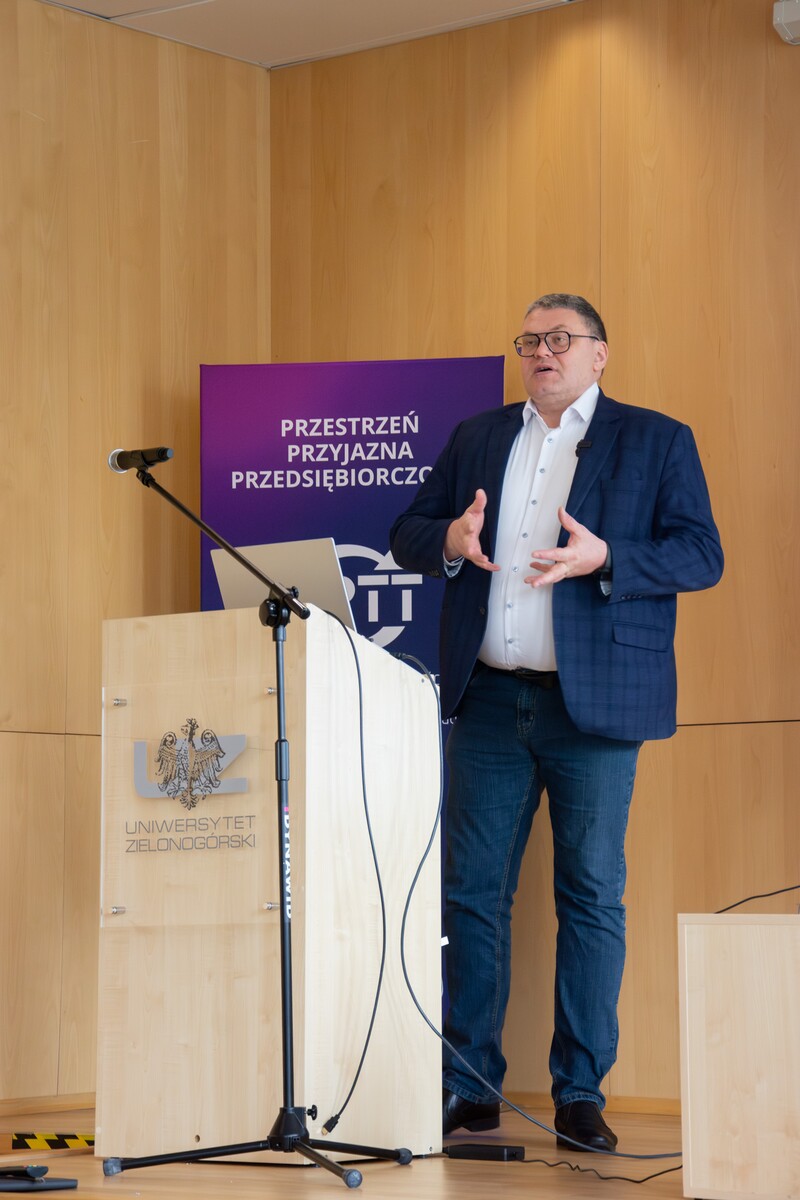
The conference showcased the scientific and entrepreneurial potential of the University, as well as the wide range of innovative projects being developed within it. During the Pitch Day session, three University of Zielona Góra startups that did not win the UZ Venture Studio competition but are being developed in cooperation with the University were also presented. This theme was further expanded upon in a presentation by Karol Dąbrowski, Director of the Centre for Entrepreneurship and Technology Transfer at the University of Zielona Góra, who discussed support for the University’s innovation ecosystem provided by the Centre for Entrepreneurship and Technology Transfer and the Centre of Scientific Excellence. He also explained the current stage of development of the first edition laureates, noting that this is a critical moment as funding is being sought to implement the projects. Earlier surveys conducted among regional entrepreneurs helped identify areas of particular interest, namely cybersecurity, medicine and space technologies.
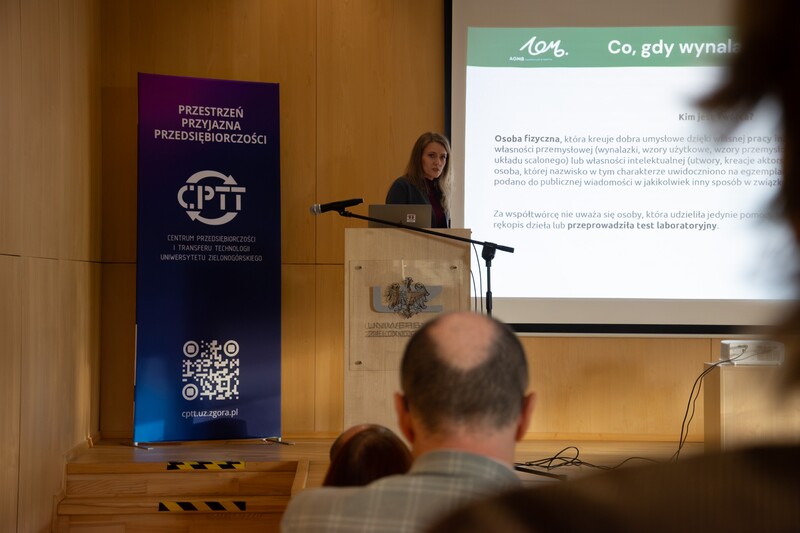
Startup teams and other event participants also benefited from valuable insights shared by expert speakers. Particularly relevant to the current business-building phase of the UZ Venture Studio laureates was a presentation by Artur Matuszczak entitled “Why the Investor Doesn’t Get It?”, in which he discussed how to communicate with potential investors, respond to their feedback—often including rejection—and maintain effective business relationships even after a refusal. Key speakers also included Radosław Wierzbicki, who addressed the topic of building a social startup based on the story of Unsung Heroes – Ventures For Humanity; Anna Gawin, PhD, a patent attorney at AOMB, who spoke on the practical aspects of intellectual property protection; and Przemysław Kołak, who presented “Three Proven Ways to Startup Success”. The event concluded with the presentation of the partners of UZ Venture Studio.
Both the event itself and the entire UZ Venture Studio programme highlighted to the academic and business communities the immense potential within the University. Students, graduates and researchers of the University of Zielona Góra are capable of transferring research results, innovative projects and social initiatives into the business world, transforming them into tangible benefits and practical solutions that drive the development of numerous industries, services and products. Supported by experts, the initiative created a stable bridge between academia and business, encouraging the academic community to take their projects beyond the University walls and develop them in line with market expectations.
The UZ Venture Studio project was implemented at the University of Zielona Góra by the Centre of Scientific Excellence and the Centre for Entrepreneurship and Technology Transfer, in cooperation with the business partner The Heart.