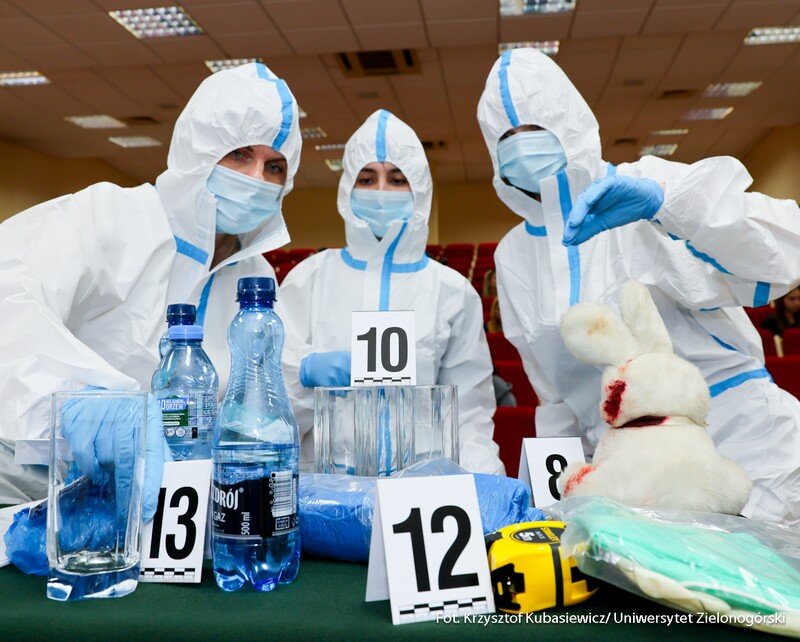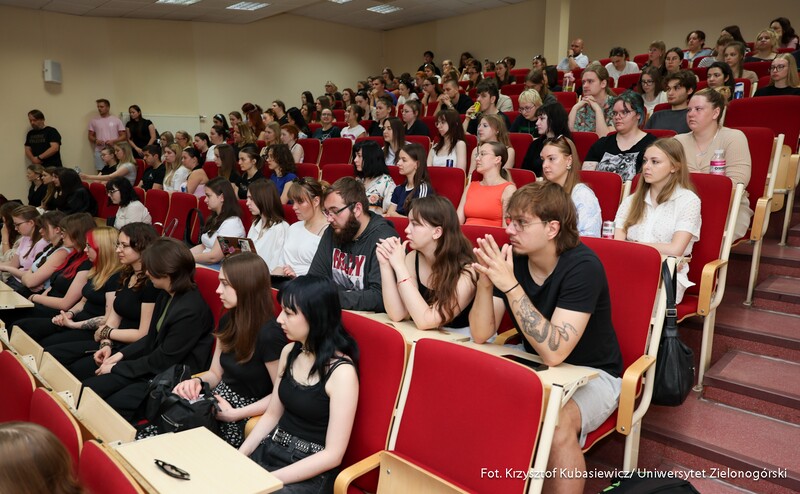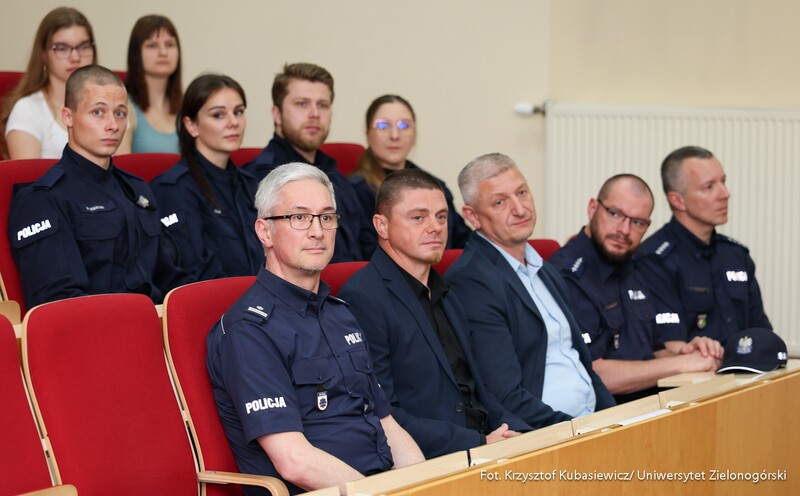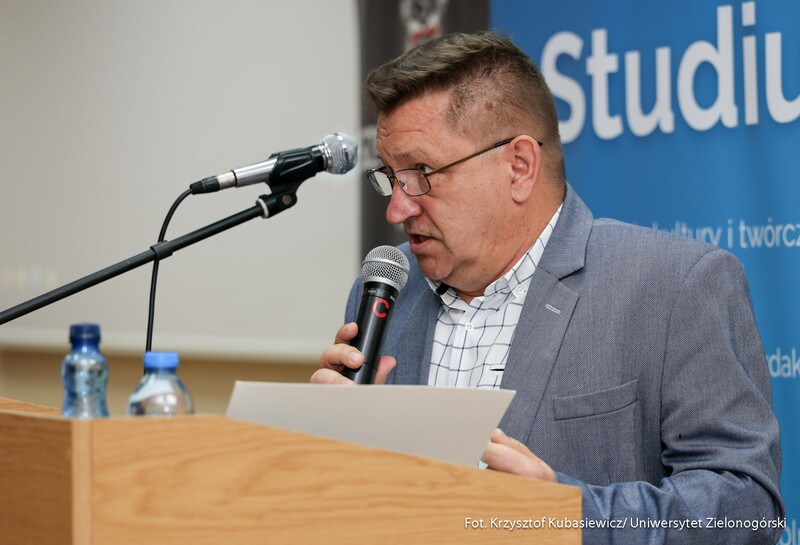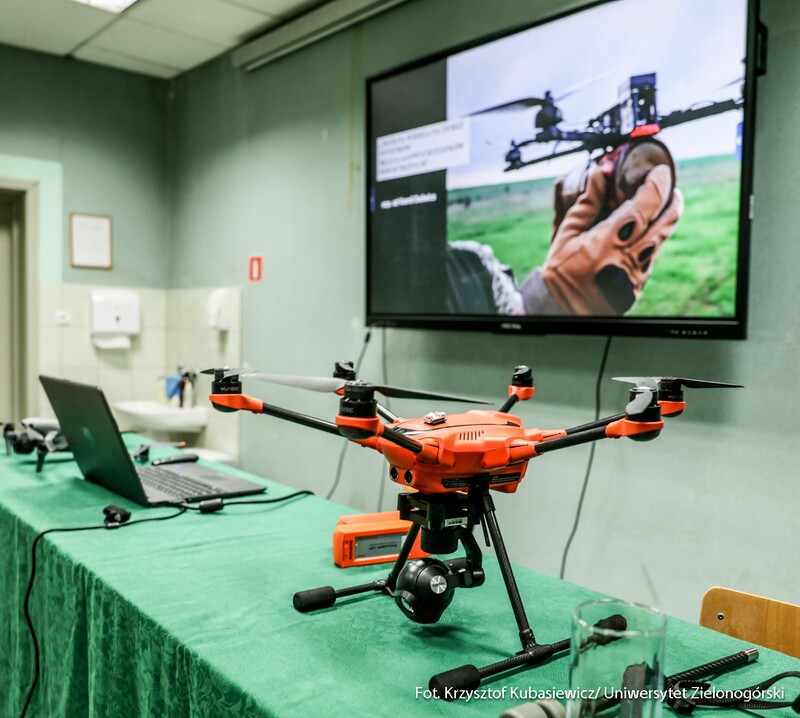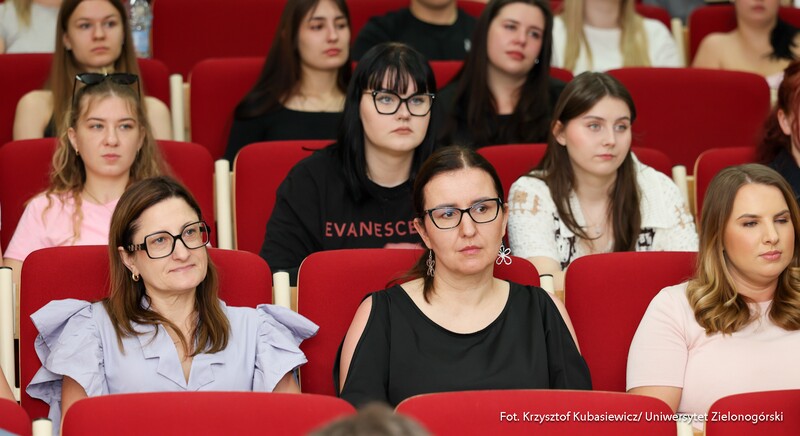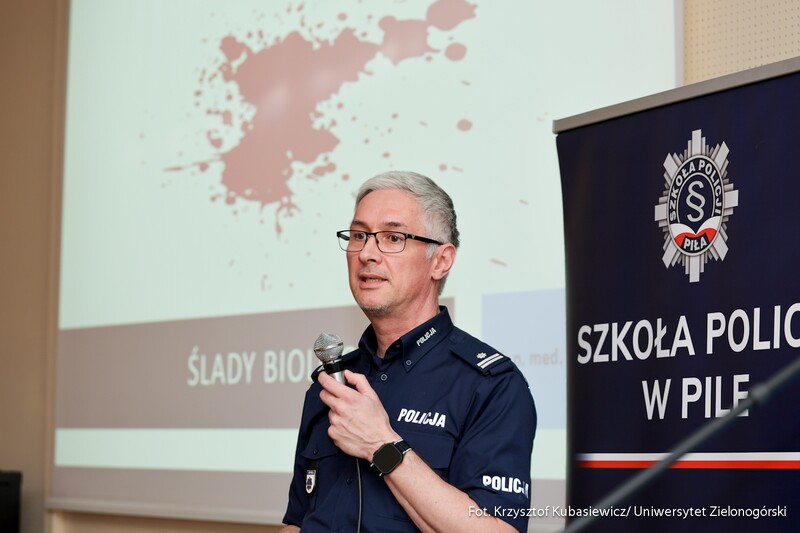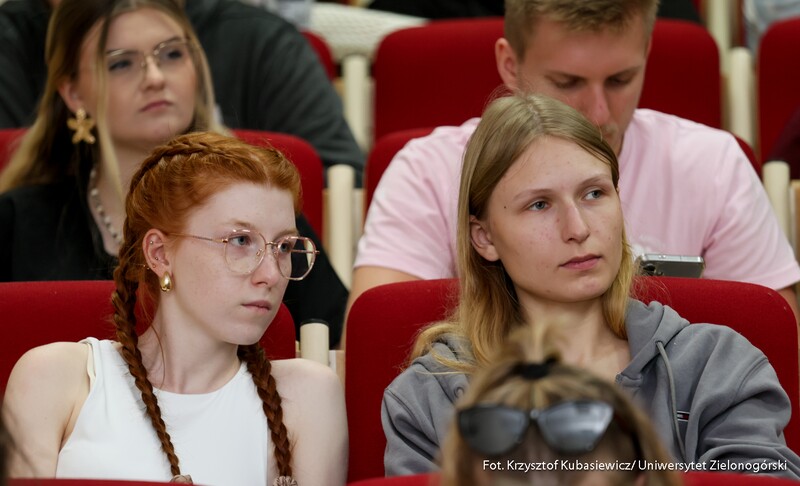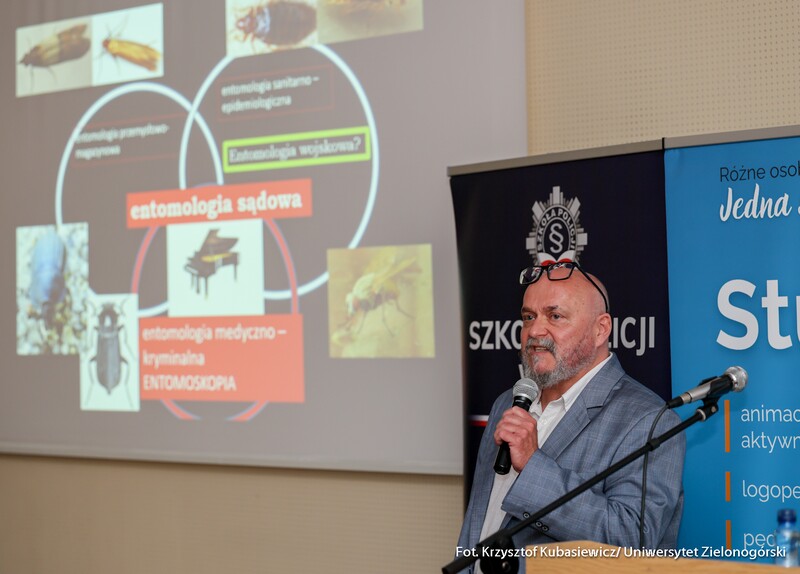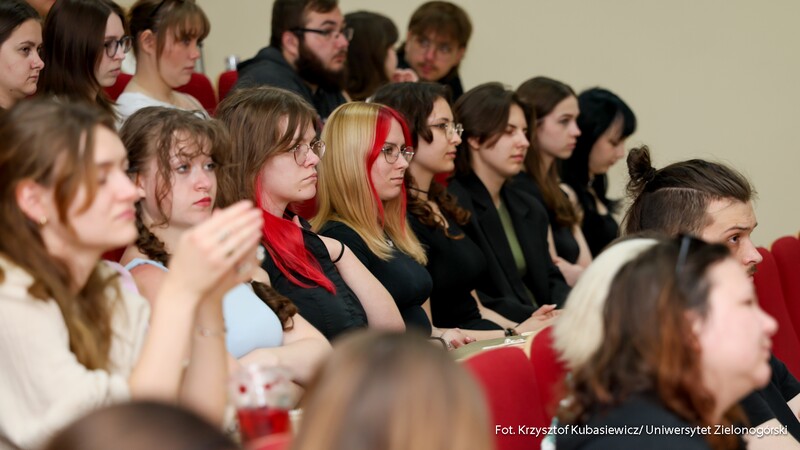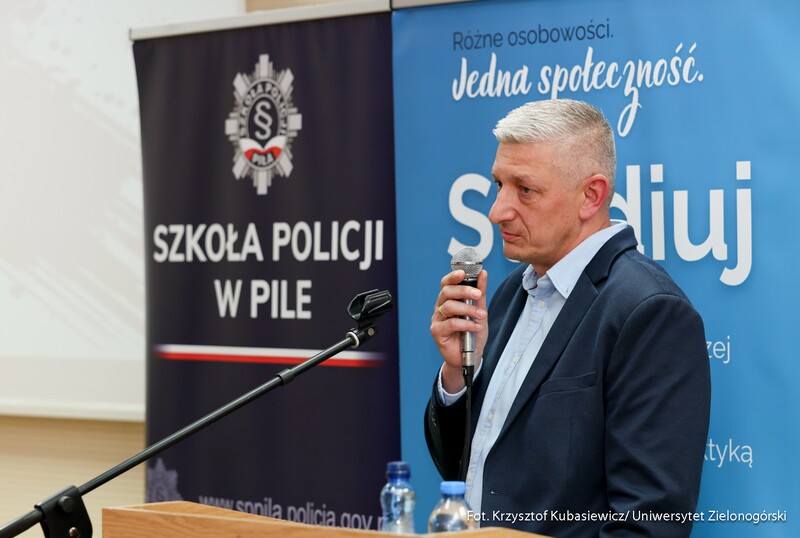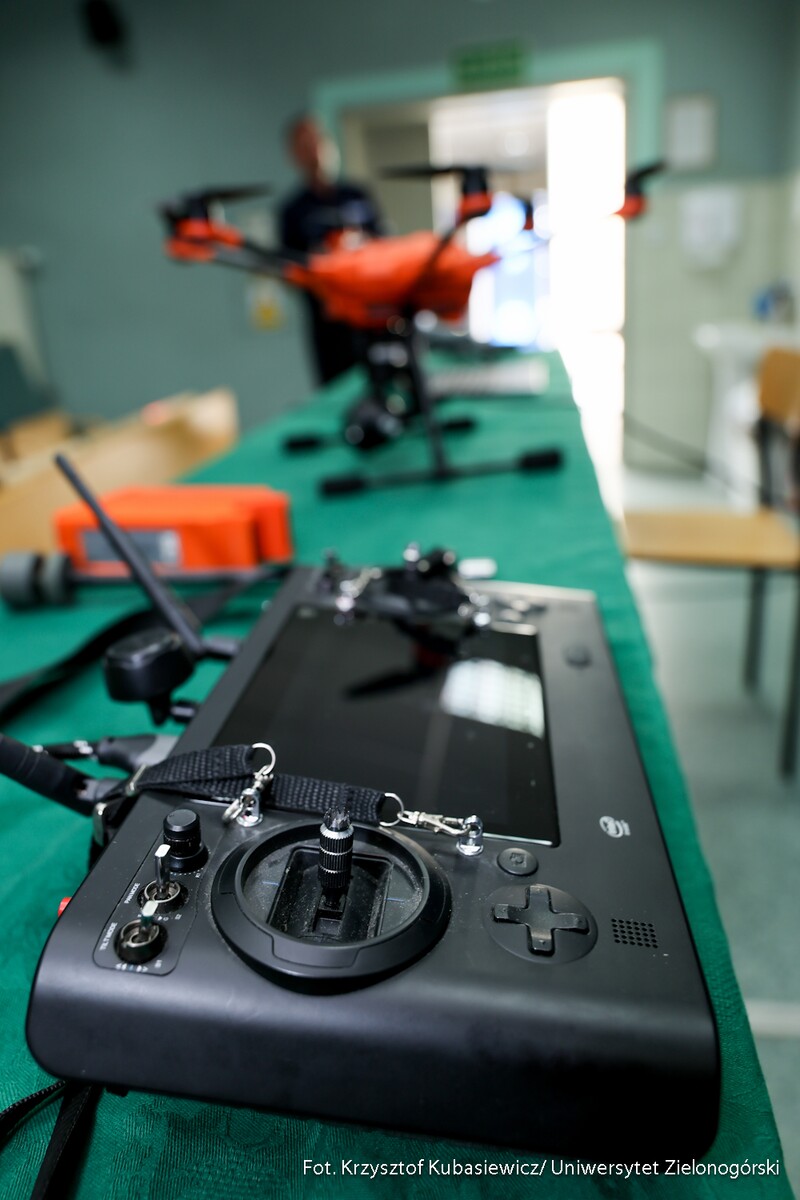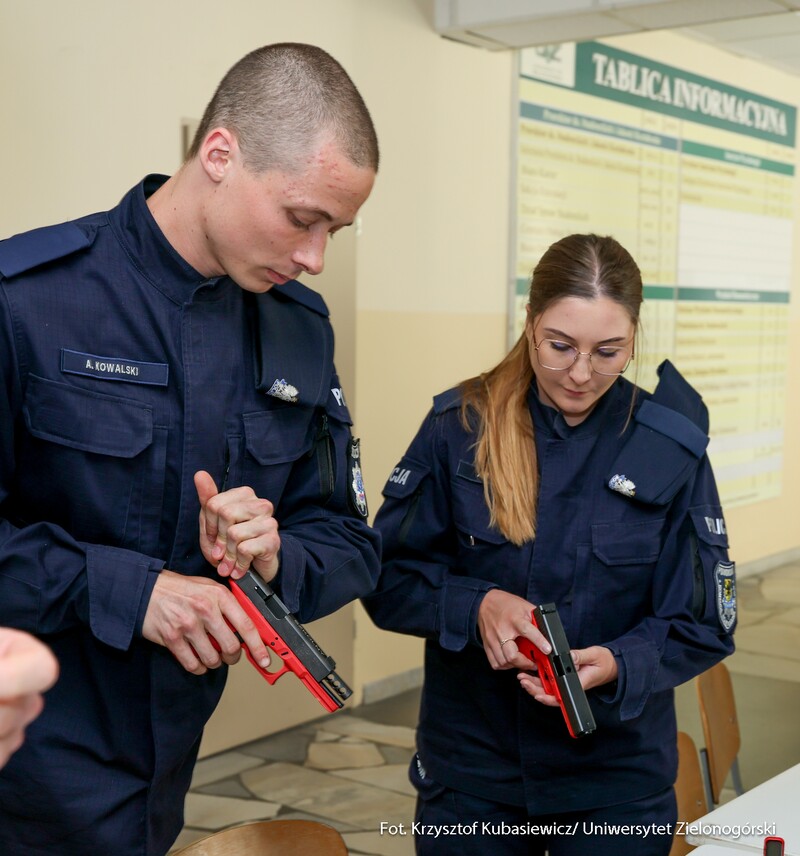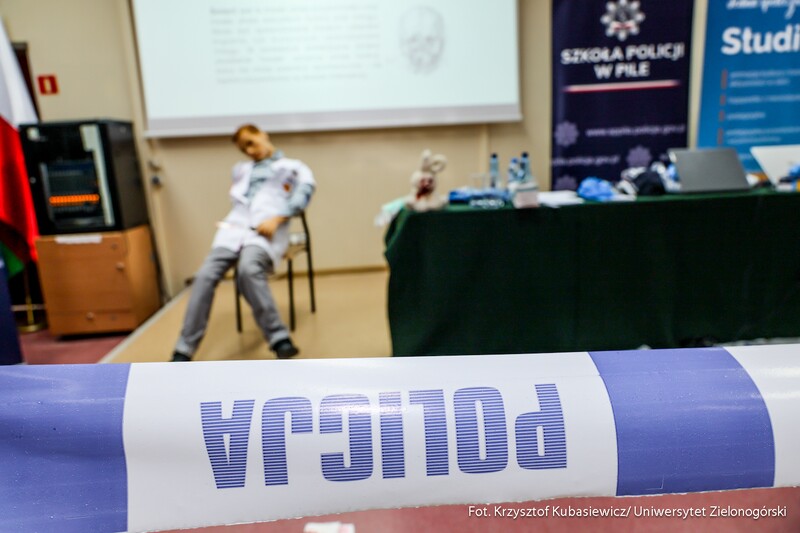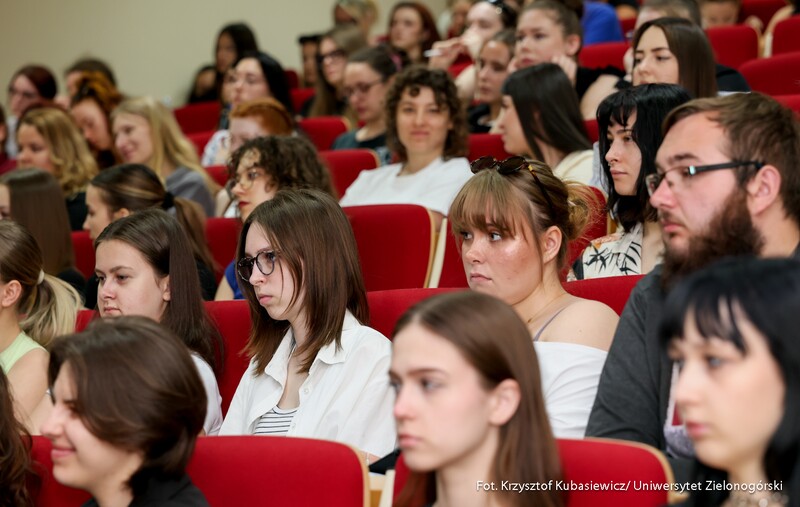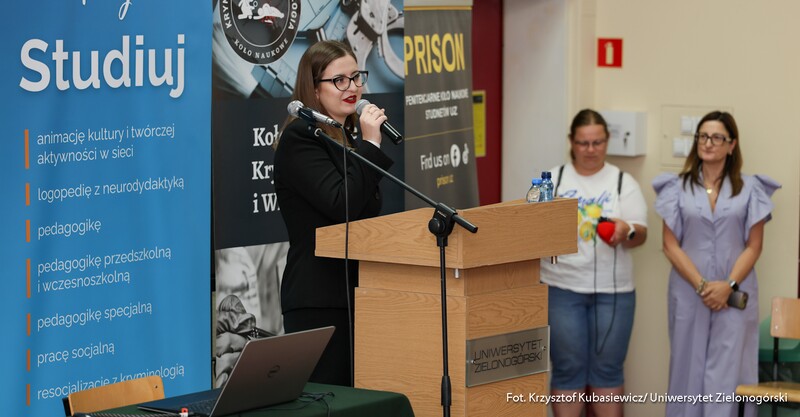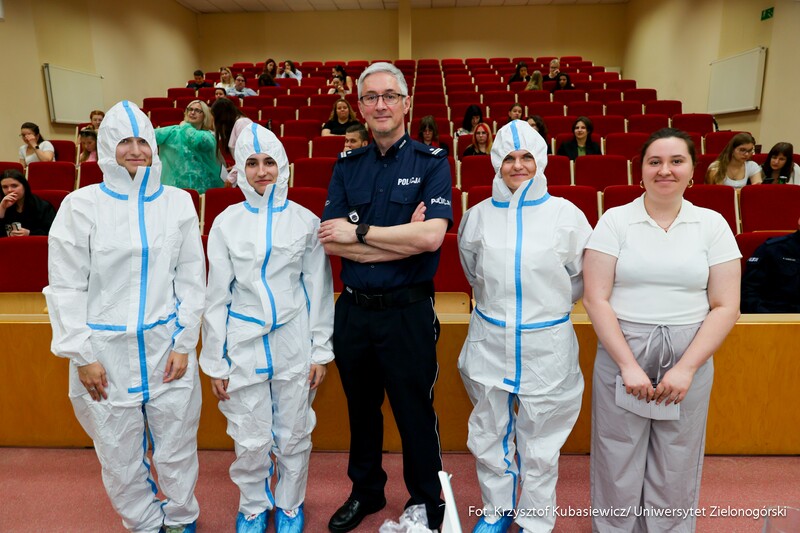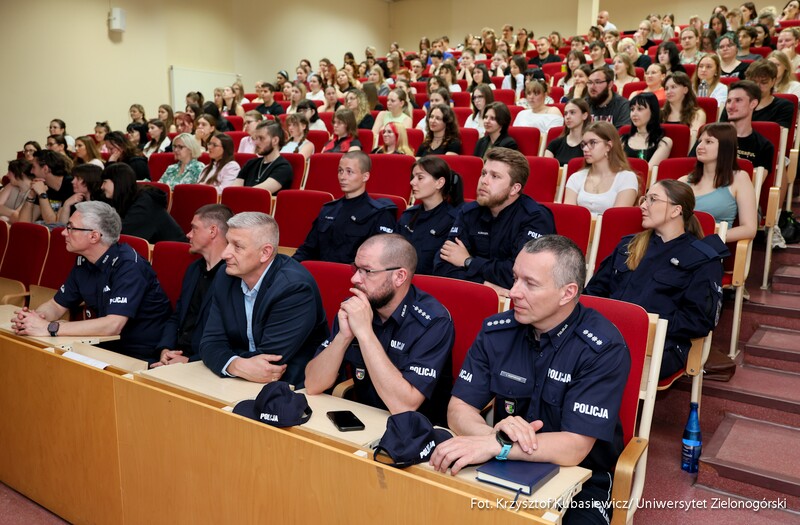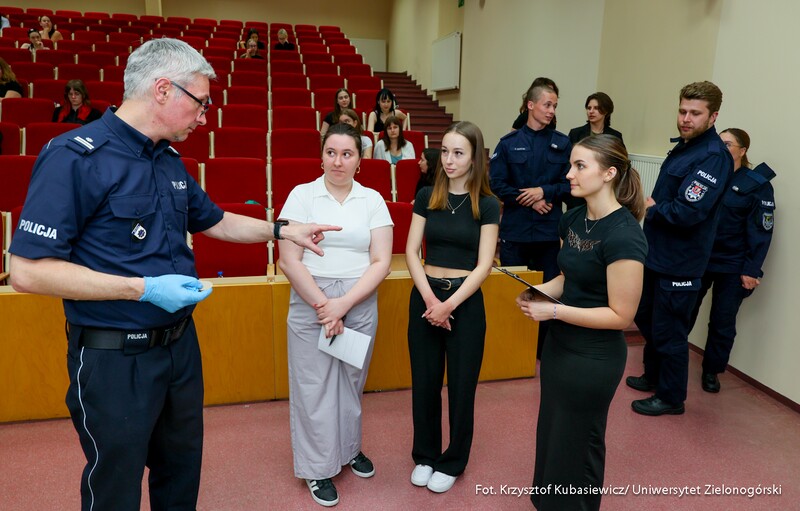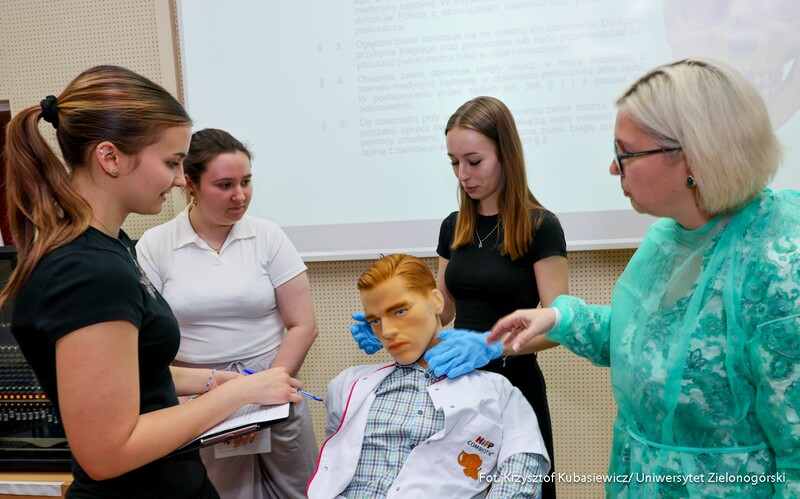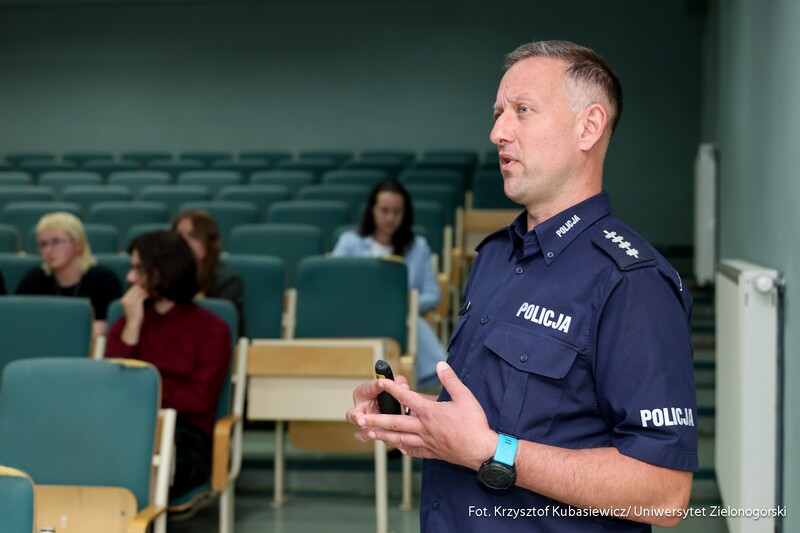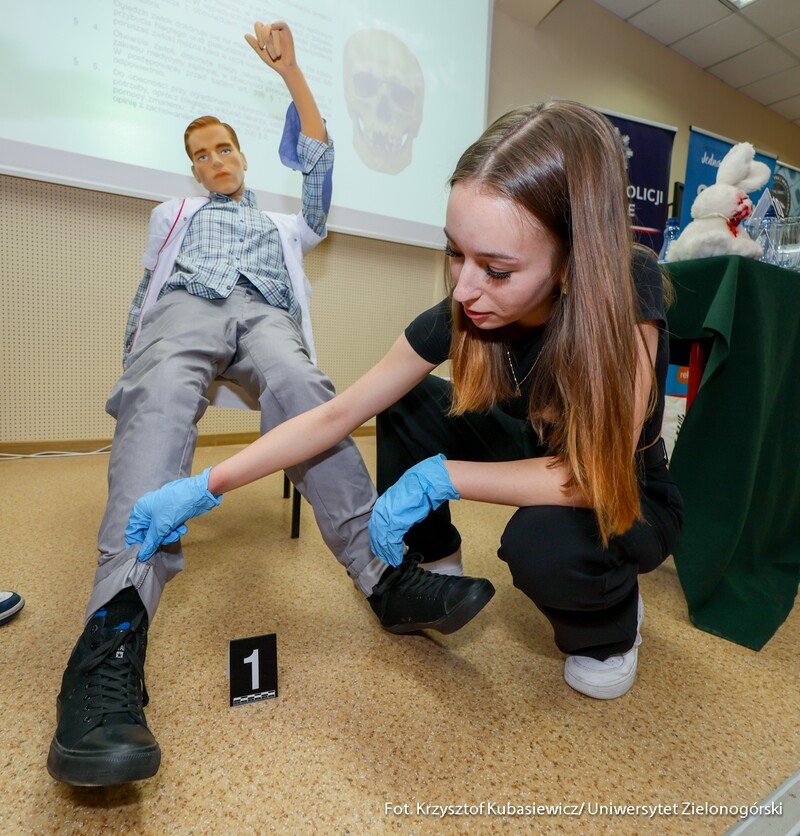
Forensic genetics in criminal investigations and the use of drones in forensic science were the two central themes of the First National Security Workshop for Young People, held at the University of Zielona Góra on Wednesday, 27 May. The scientific and practical workshop attracted a large audience of experts, academics, and students, including participants from the Police Academy in Piła.
The primary aim of the event was to introduce young people to the latest technological developments used in contemporary forensic science and criminal investigations. The workshop provided a valuable platform for raising awareness of modern forensic methods, deepening specialist knowledge, and, above all, bridging the gap between theory and practice.
“At universities, we often focus primarily on theoretical knowledge. Workshops like these offer an opportunity to see how these techniques are applied in real-life situations. For students, there is no better combination than bringing theory and practice together – it is truly invaluable,” said Dr Adam Stankiewicz from the Institute of Pedagogy at the University of Zielona Góra.
The First National Security Workshop was organised jointly by the University of Zielona Góra and the Police Academy in Piła, further strengthening the cooperation between the two institutions.
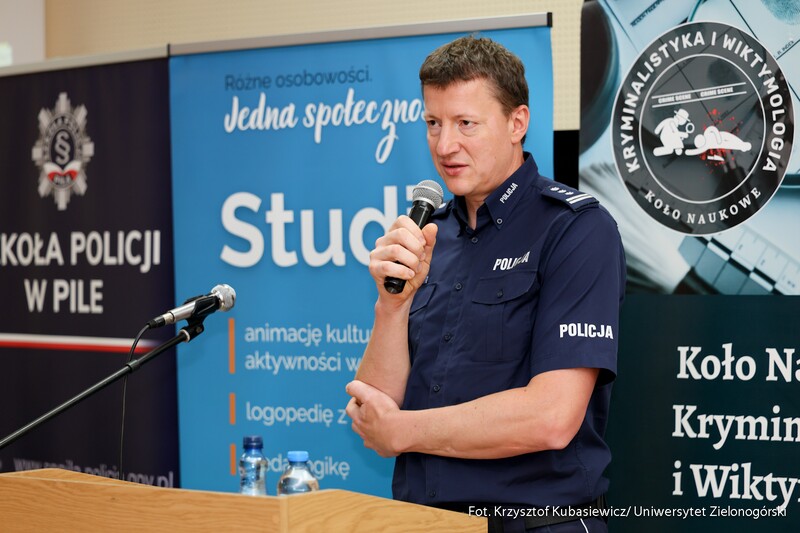
“A few weeks ago, we signed a cooperation agreement, and today’s workshop is an excellent example of that partnership in action,” explained Inspector Marcin Sapun, Deputy Commandant for Academic Affairs at the Police Academy in Piła.
“The sessions focused on the policing perspective. We prepared a thematic block dedicated to forensic genetics, one of the fastest-growing and most dynamic branches of forensic science, which still holds enormous potential for further development. We also discussed the use of drones in police work and presented some of the latest innovations in forensic investigations. Modern policing increasingly relies on advanced technologies. It is worth remembering that forensic genetics revolutionised criminal investigations and has enabled law enforcement agencies to identify and prosecute countless offenders. We were also joined by officers from the so-called ‘X-Files Unit’, which specialises in solving long-unsolved criminal cases.”
Participants in the workshop included students of Social Rehabilitation with Criminology, Law, and various Medical Sciences programmes.
According to Marta Romanowska, a student at the University of Zielona Góra, events of this kind are of tremendous educational value:
“These meetings are extremely important to us because they give us the opportunity to see these issues from the perspective of professionals who deal with them on a daily basis. The police officers showed us what their work looks like in practice. The workshops themselves were also fascinating. Both forensic genetics and the use of drones in criminal investigations are highly interesting topics. We have encountered some of these issues during our studies, but many of the subjects discussed today go beyond the scope of our regular lectures and classes.”
The organisers of the First National Security Workshop for Young People have already announced that the event will become a regular initiative, creating an ongoing platform for dialogue between academia and practitioners and providing students with direct access to the latest developments in security studies, forensic science, and law enforcement.