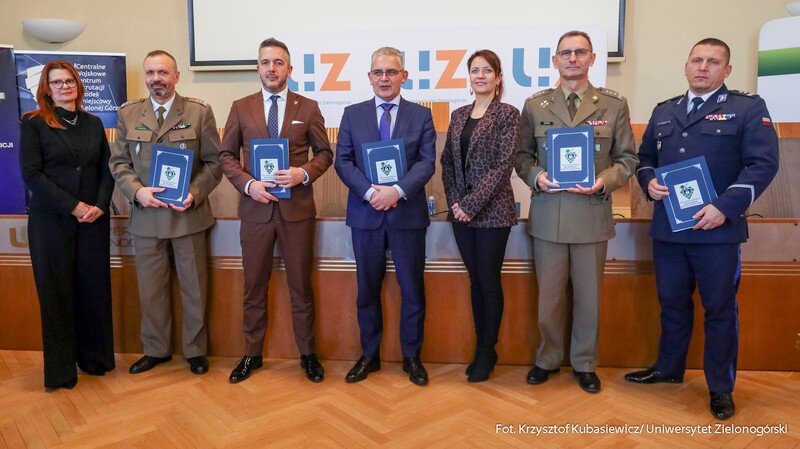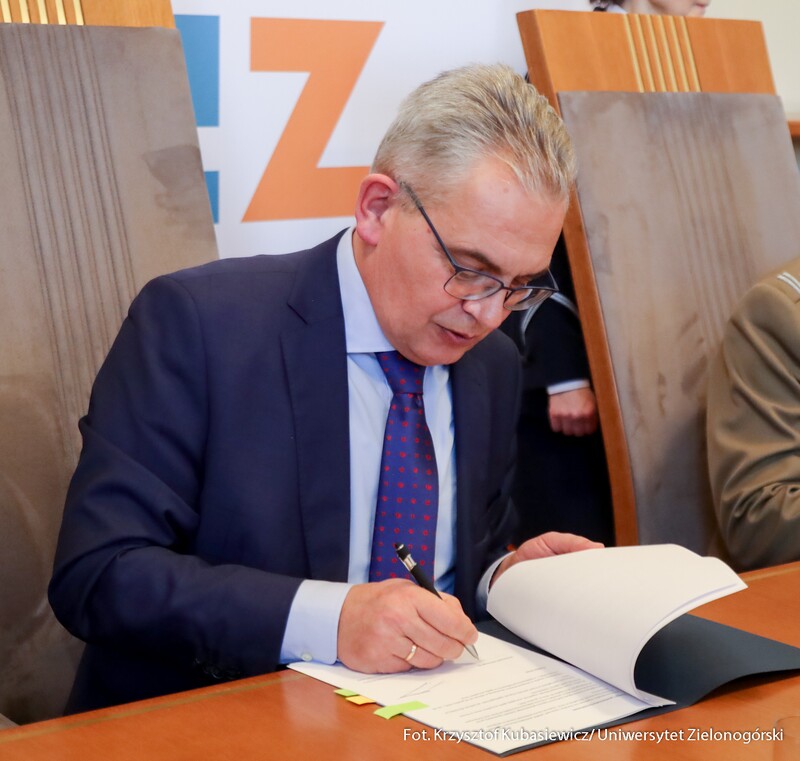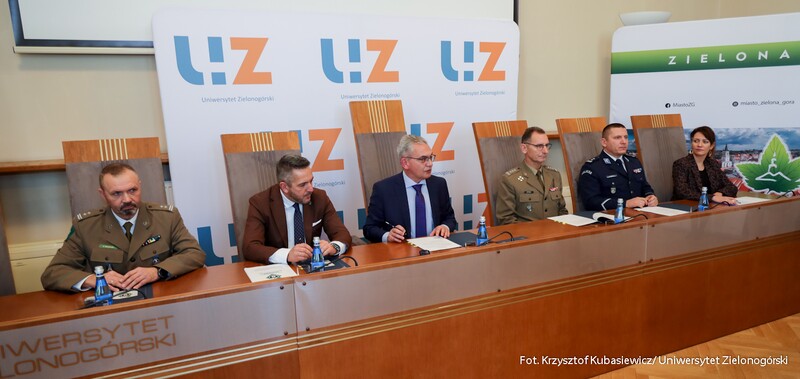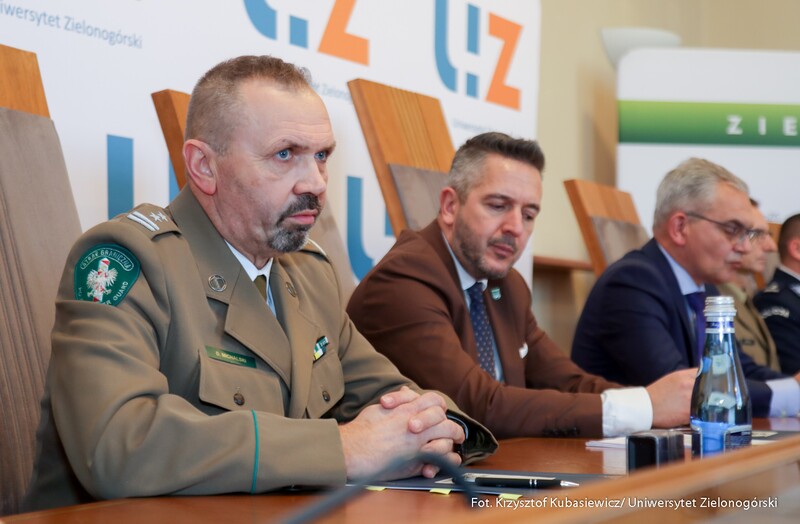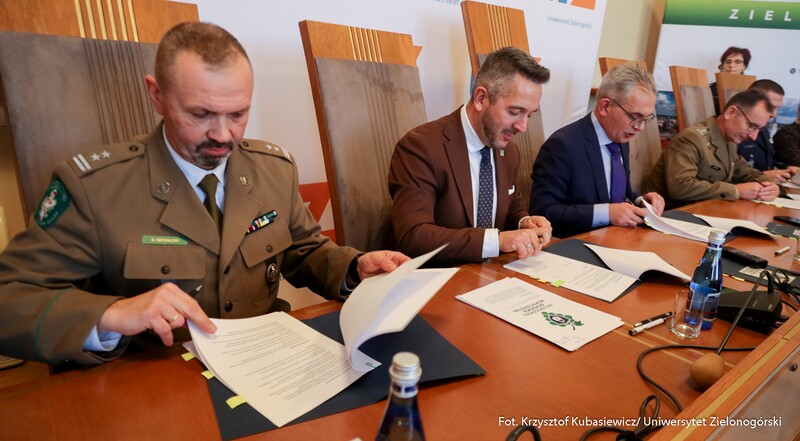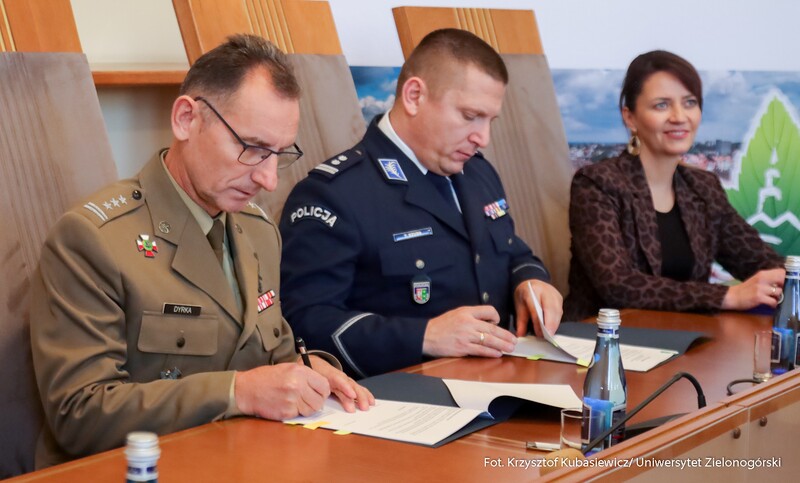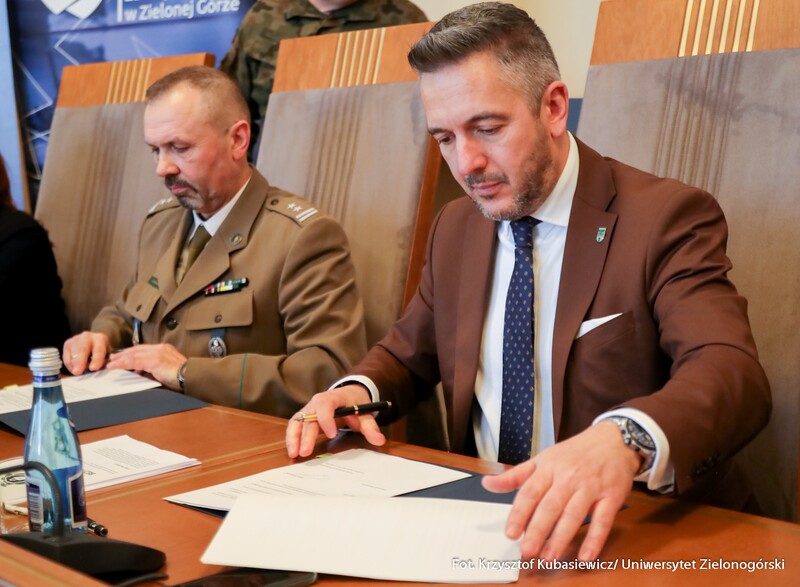
Zielona Góra is focusing on security. On Thursday, 18 December this year, an agreement was signed to establish the Zielona Góra Security Academy. The leading partners of the project are the University of Zielona Góra, the City of Zielona Góra, and the Zielona Góra Branch of the Central Military Recruitment Center. The initiative also involves the Municipal Police Headquarters in Zielona Góra, the Nadodrzański Branch of the Border Guard, the Municipal Headquarters of the State Fire Service in Zielona Góra, and the Tax Administration Chamber in Zielona Góra.
The idea behind the project is straightforward—it focuses primarily on educating pupils in the areas of security and social responsibility through practical classes and direct contact with uniformed services and security institutions. All activities will be carried out as part of a pilot program, with the University of Zielona Góra acting as the coordinator of the entire initiative.
“Together with the uniformed services, we want to educate young people—provide them with information on safety and rules of conduct in crisis situations. We also hope that some participants will decide to join the uniformed services, perhaps after completing their studies at the University of Zielona Góra. From a security perspective, study programs such as national security, law, and health-related fields are undoubtedly useful. Pedagogy programs will also prove practical in this area,” explains Prof. Wojciech Strzyżewski, DSc, Rector of the University of Zielona Góra.
The plan therefore includes promoting uniformed professions as realistic career paths and supporting career guidance.
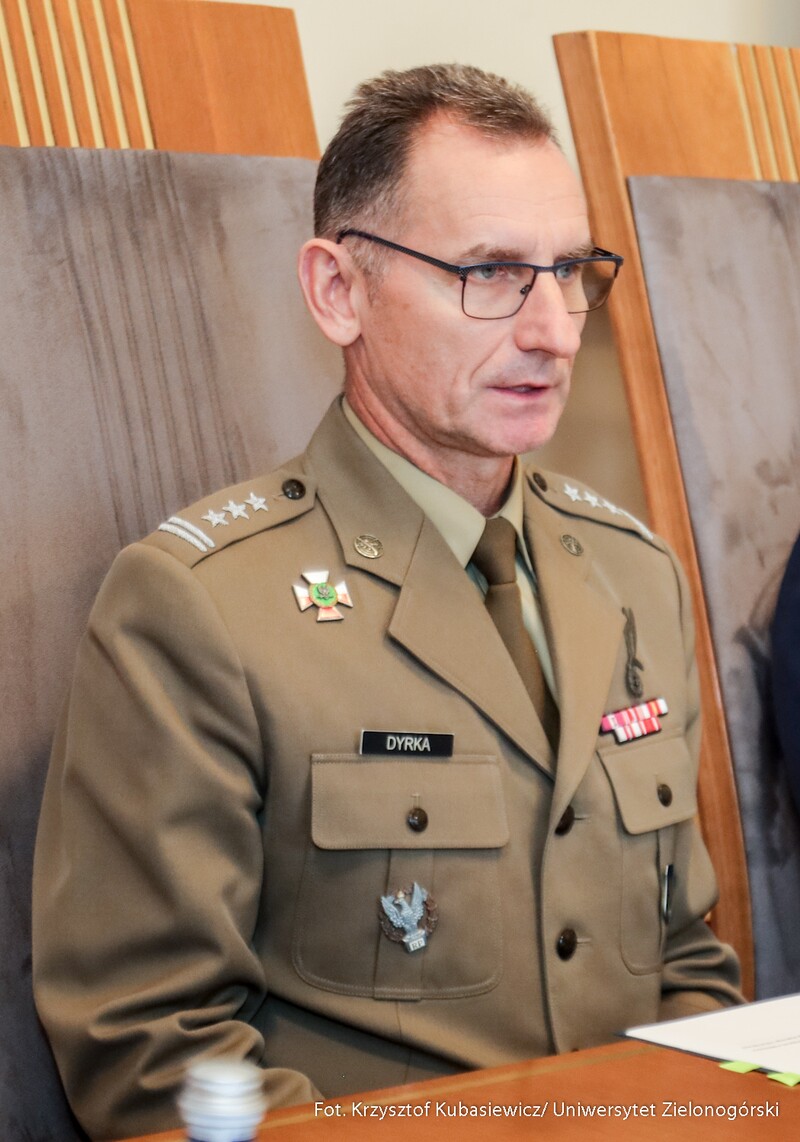
“We will try to reach as many pupils as possible—from primary schools to secondary schools. The program will run throughout the entire coming year. We will visit these institutions on a regular basis. We will start with theory and conclude with practical classes. The scope of activities will be very broad—each uniformed service will pass on knowledge and skills from its specific field of operation to children and young people,” says Colonel Grzegorz Dyrka, Head of the Zielona Góra Branch of the Central Military Recruitment Center.
Initially, the pilot program will cover three educational institutions in Zielona Góra: Primary School No. 5 within Educational Complex No. 5, the 4th General Secondary School named after Col. Pilot Eugeniusz Horbaczewski, and the 5th General Secondary School named after Krzysztof Kieślowski.
“This initiative emerged in response to ongoing geopolitical changes in our country and beyond our eastern border. I believe it will be an excellent opportunity for integration and exchange of experience between the academic community, local government, and uniformed services. Our youth will be able to see what working in uniform looks like on a daily basis. Most importantly, the project partners will show students how to behave in various situations that may occur in their surroundings,” adds Paweł Tonder, Deputy Mayor of Zielona Góra.
The Zielona Góra Security Academy project also aims to shape civic and pro-social attitudes, including readiness to help others.
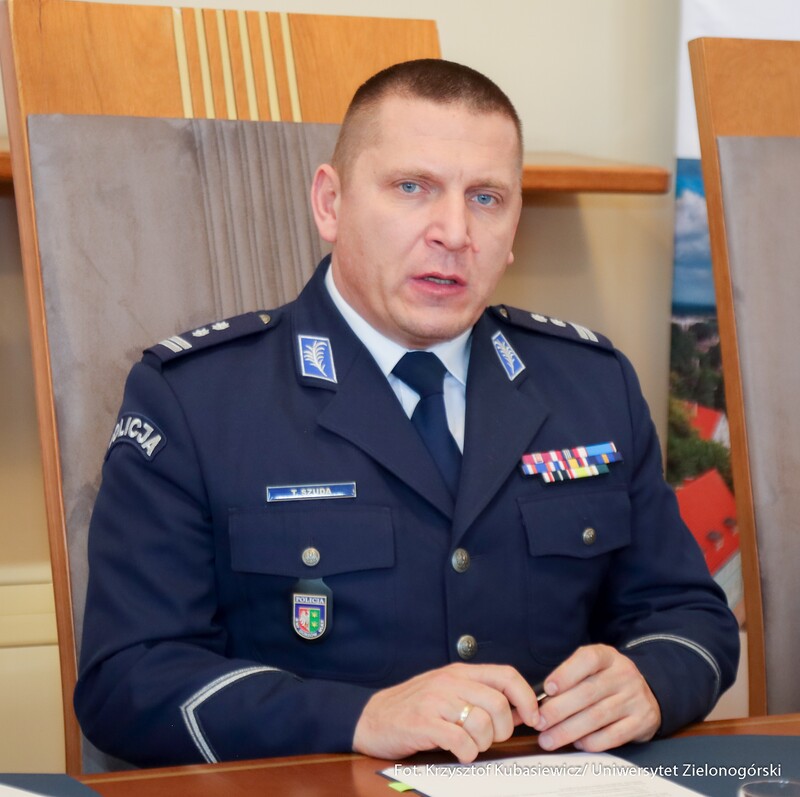
“Students of Zielona Góra schools will have the opportunity to develop practical competencies—teamwork, first aid, and responding to emergency situations. We are talking about both the physical and digital environments. We will show children and young people how to behave in the face of danger. Police officers will also present self-defense procedures in the event of an attack by an assailant. Projects like this are very much needed. We never know what awaits us or what situation we or our loved ones may find ourselves in. Any knowledge can prove useful in maintaining safety,” explains Junior Inspector Tomasz Szuda, Municipal Police Commander in Zielona Góra.
Considerable emphasis will also be placed on presenting the community of uniformed services operating in Zielona Góra as an integrated and cooperating security system.
“The most important thing is to make young people aware of what security is and how it can be ensured. As the Border Guard, we will address topics such as illegal migration and human trafficking. We must also be prepared for such threats,” comments Lieutenant Colonel Dariusz Michalski of the Border Guard, Commander of the Border Guard Post in Zielona Góra–Babimost.
As all parties to the agreement emphasize, the pilot program will make it possible to develop a model of cooperation in security education that can later be expanded to include additional schools.